
AI news ·
Study finds AI workplace decisions increase employee dehumanisation and intentions to quit
A 700-person study found AI HR decisions cause more negative employee reactions than human managers. Experts say humans must make final calls to stop staff feeling objectified.
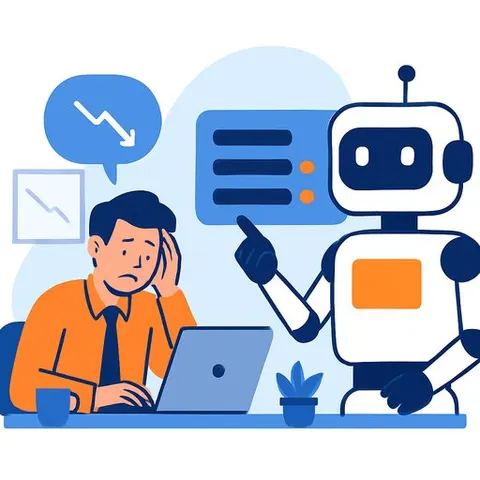
New research from the Chinese University of Hong Kong (CUHK) Business School reveals that using AI to make decisions about hiring, promotions, and pay raises triggers significantly more negative reactions from employees than when the same decisions come from human managers. The findings, drawn from three online experiments involving nearly 700 participants, point to a phenomenon the researchers call organisational dehumanisation - a sense of being treated as a functional unit rather than an individual.
Employees feel objectified and excluded
Across all experiments, participants consistently reported lower commitment to their organisation, stronger intentions to quit, and greater retaliatory feelings when AI was responsible for career-related outcomes. According to the study, employees perceive AI systems as lacking empathy and failing to grasp social and ethical nuances. Many also find the decision-making processes opaque, which leaves them feeling powerless and cut off from the process.
"Putting it all together, loss of empathy, transparency, and control can leave people feeling objectified," said Professor Choi Sungwoo, Assistant Professor at the School of Hotel and Tourism Management of CUHK Business School, who led the study. "When AI performs human resources operations, employee characteristics are seen as numbers. Therefore, employees would feel like they are not treated as humans."
A cultural paradox in people-first workplaces
The study identifies a counterintuitive pattern: companies with highly collaborative, people-oriented cultures may face stronger resistance when introducing AI into HR functions. In these environments, employees expect management to prioritise cooperation, support, and interpersonal relationships. AI-driven personnel decisions can therefore clash with those expectations, making the dehumanisation effect more pronounced.
For HR teams, this creates a tricky balancing act. The same tools that promise efficiency and consistency can corrode the very culture leaders have worked to build. The research suggests that the mode of deployment matters as much as the technology itself. As organizations explore AI for Human Resources, understanding these human responses becomes essential to avoiding unintended damage.
Hybrid systems preserve a human touch
The researchers emphasize that companies should not abandon AI altogether. Instead, they recommend hybrid systems where humans remain accountable for consequential decisions. AI can analyse data and offer recommendations, but a person should own the final call.
"This hybrid approach helps preserve the sense that consequential decisions about people are ultimately made by people," Professor Choi said. "If AI serves only in an assistive capacity with limited input into the final decision, the dehumanisation effect should be substantially mitigated."
For senior HR leaders shaping strategy, the insight is clear. The technical capability of AI is not in question; the challenge lies in retaining employee trust while adopting it. A formal AI Learning Path for CHROs can help executives design governance models that keep people at the centre of critical talent decisions.
Why this matters for HR leaders
The takeaway is not to slow down AI adoption, but to rethink who has the final say. Employees are telling researchers - and likely their own managers - that they need to see a human face behind decisions that shape their careers. HR leaders who build that expectation into their AI rollout plans will reduce turnover risk and protect the relational fabric of their organisations.