
AI news ·
Study finds surgical patients prefer mix of AI and human interpreters for language access
Surgical patients prefer having a choice between AI and human interpreters, not one or the other, a Mass General Brigham study found. Most patients said a combination of both would work best.
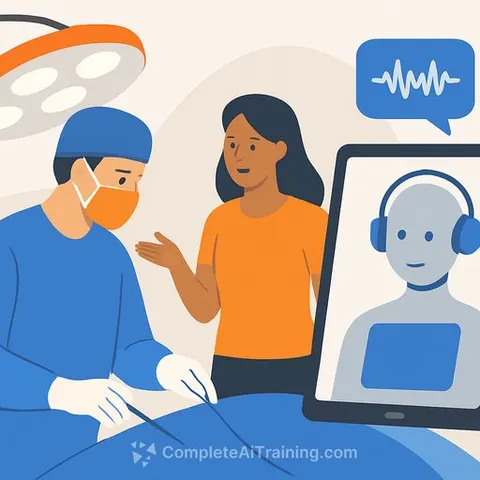
Hospitals rethink language access in surgery with AI interpretation
Language barriers in operating theaters undermine patient safety, erode trust, and worsen clinical outcomes. Yet hospitals adopting AI-powered interpretation services often make decisions without understanding how patients experience these tools or whether they see them as replacements for human interpreters.
A study at Mass General Brigham examined how Spanish-speaking surgical patients respond to AI medical interpretation alongside remote video interpretation. Researchers recruited 23 patients from the Department of Surgery at Brigham and Women's Hospital and assessed their preferences across interpretation methods.
The research, published in the New England Journal of Medicine, found that patients value choice above all else. Remote video interpretation was preferred for emotionally sensitive conversations. AI interpretation was valued for instant, private translation. Most patients said a combination would be ideal.
Flexibility matters more than technology type
The study used a modified technology acceptance model to measure patient preferences. Rather than asking whether patients liked AI or video interpretation in isolation, researchers assessed how patients weighed usefulness, ease of use, emotional resonance, cultural alignment, and trust.
The data showed that flexibility and patient choice were the dominant themes. Patients did better when they had clear, accessible options reflecting their needs and circumstances.
One key finding: when patients feel heard and have options, engagement improves and outcomes follow.
A hybrid approach recognizes different needs
The study's authors argue that language access should not be treated as supplemental to care-it is critical to care processes. A single interpretation method does not fit all patients or all situations.
The advantage of offering multiple modalities is straightforward: care can meet people where they are. A surgical patient facing an emotionally difficult conversation may need a human interpreter. Another patient may prefer the privacy and speed of AI interpretation for routine pre-operative questions.
The findings suggest hospitals should evaluate interpretation tools not as replacements for existing services, but as additions to them. The goal is expanding how patients can access language support, not narrowing it.
For healthcare professionals implementing these technologies, the lesson is clear: ask patients what they need, then give them options.