
AI news ·
Study identifies leadership, teamwork and emotional intelligence as the skills least likely to be automated
A 2026 GoHumanize study of 60 professional skills found leadership, teamwork, and negotiation are among the hardest for AI to automate. People-focused abilities ranked well above technical skills in automation resistance.
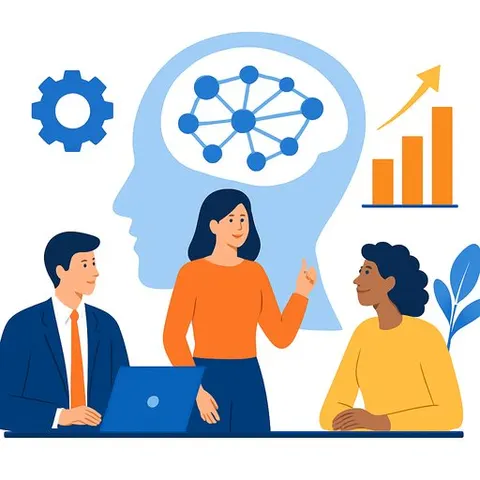
Study identifies 10 human skills AI won't replace in the next decade
Leadership, teamwork, and negotiation will remain difficult for machines to automate, according to research published in May 2026 by GoHumanize, a US-based AI company. The study examined 60 professional skills and ranked them by employer demand, job market frequency, automation resistance, and dependence on uniquely human traits like empathy and ethical reasoning.
The findings matter for HR professionals tasked with workforce planning. While the report forecasts that about 25 per cent of jobs could be automated within the coming decade, skills centered on managing people and understanding emotions ranked significantly higher than technical or data-driven abilities.
The top five future-proof skills
Leadership topped the list with an employer importance score of 95 out of 100. While machines may automate around 31 per cent of leadership-related tasks, the core work-inspiring people, resolving conflicts, motivating teams, and making judgment calls in uncertain situations-remains human-dependent. The skill received a human dependency score of 93 out of 100.
Teamwork came second. Nearly four million active job listings mention collaboration as a key requirement. Effective teamwork involves recognizing unspoken tensions, adapting to communication styles, managing personalities, and building long-term trust. It received a human dependency score of 79 out of 100.
Negotiation ranked third. Almost 2.8 million job postings seek professionals with negotiation abilities. While AI tools can assist with preparation and research, machines will only automate about 47 per cent of negotiation work. The remaining tasks require reading body language, understanding tone, and responding to emotional cues. The skill scored 89 out of 100 for human dependency.
Coaching and mentoring also ranked among the least replaceable skills. Mentors must determine whether someone struggles due to lack of knowledge, confidence, motivation, or emotional support-a nuanced judgment machines cannot replicate. Nearly two-thirds of coaching-related tasks remain beyond AI's current capabilities.
Public speaking completed the top five. Communication delivered with confidence, conviction, and personal presence remains difficult for AI systems to imitate. Over 2.5 million job postings reference communication or public speaking abilities. The skill showed 74 per cent resistance to automation.
The broader picture for HR leaders
The remaining five skills in the top 10 are organizational leadership, people management, emotional intelligence, interpersonal skills, and change management.
The study's author argued that education systems may be prioritizing the wrong areas for long-term career security. Universities continue emphasizing STEM education and analytical training even as technical tasks become increasingly automatable.
For HR professionals, the implication is clear: professionals who develop communication, leadership, empathy, and decision-making abilities will be better positioned in an AI-driven economy than those relying solely on technical expertise.
Learn more about how AI is reshaping human resources functions through AI for Human Resources. HR leaders can also explore strategic workforce transformation with the AI Learning Path for CHROs.