
AI news ·
Successful AI supply chains require coordination, governance, and workforce capabilities
Technology alone won't build an AI supply chain. A June 30 report lists 5 management priorities for success, including clear decision ownership and data governance.
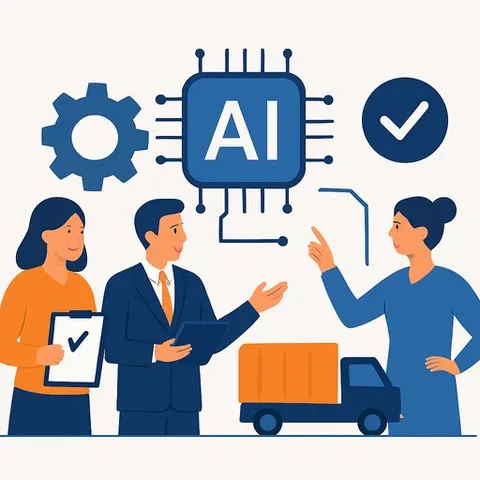
Organizations are embedding AI across planning, procurement, manufacturing, logistics, and inventory management, but new research shows that technology alone won't create an AI-enabled supply chain. The findings, released June 30, point to a hard reality: successful deployments depend on connected workflows, clear decision-making authority, cross-functional collaboration, and effective governance.
The coordination gap in AI adoption
Fragmented systems and limited real-time visibility prevent many AI initiatives from scaling. The research identifies poor data governance as a recurring barrier. Without a unified view of operations, even well-designed AI tools deliver inconsistent results. Teams end up with intelligence that is difficult to act on because the underlying processes and data structures were never aligned.
Building teams with the right skills
Technology adoption is only half the equation. Organizations need people who can bridge the gap between data science and day-to-day supply chain execution. That means developing both technical capabilities-such as data modeling and system integration-and human skills like cross-functional communication and decision-making under uncertainty. AI Learning Path for Supply Chain Managers provide structured ways to build these combined competencies.
Five priorities for scaling AI successfully
The research outlines five areas where management focus can make or break an AI rollout:
- Clarify decision ownership across planning, sourcing, and logistics.
- Improve real-time operational visibility to reduce blind spots.
- Strengthen data governance so that AI models work from a single source of truth.
- Prepare employees for AI-enabled operations through targeted upskilling.
- Integrate connected workflows that tie insights to frontline action.
Why this matters for management
Managers leading AI adoption in supply chains must shift attention from tool selection to operational design. The biggest risks are not technical failures but breakdowns in coordination, unclear decision rights, and teams unprepared to use AI outputs. Leaders who prioritize governance, visibility, and workforce readiness are more likely to turn intelligent systems into measurable business results. More information is available at apqc.org.