
AI news ·
Surgical patients prefer hybrid AI and human interpreters for medical communication, study finds
AI translation helped surgical patients with quick logistics but fell short for high-stakes talks. A Mass General Brigham study found most patients preferred a hybrid approach-AI plus human interpreters.
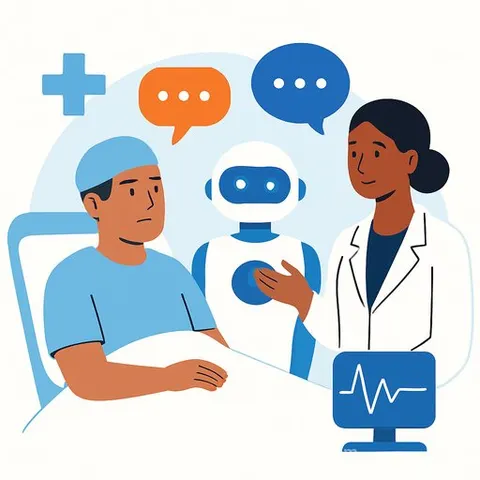
Study finds AI medical interpreters work best alongside human translators
Researchers at Mass General Brigham evaluated AI-powered translation in surgical settings and found patients want choice, not replacement. The study, published in NEJM Catalyst, compared traditional video interpreters, an AI system covering 40+ languages, and a hybrid approach using both.
Spanish-speaking surgical patients at Brigham and Women's Hospital rated each method on usefulness, ease of use, trust, and cultural alignment. The AI system delivered speed and privacy advantages. Patients used it for straightforward logistical questions without hesitation.
But the results diverged sharply for emotionally complex conversations. Patients preferred human interpreters when discussing surgical risks, recovery expectations, or other high-stakes topics where tone and reassurance matter. Many participants summarized their preference simply: "A combination would be ideal."
Language barriers affect diagnosis and treatment
Language access is a documented source of inequity in healthcare. Miscommunication delays diagnosis, reduces treatment adherence, and compounds existing disparities. On-demand AI translation could reduce these delays, particularly in fast-paced surgical environments where minutes count.
Yet the study underscores that medical communication is not purely transactional. Trust, empathy, and cultural understanding remain critical when patients face procedures carrying risk or uncertainty.
AI functions best as augmentation, not substitution
The findings suggest AI works most effectively when it augments existing systems rather than replacing them. Clinicians and patients can choose the appropriate mode depending on context-AI for efficiency, human interpreters for nuance.
This pattern reflects a broader trend in clinical AI integration. Rather than wholesale transformation, effective implementation often means testing new tools alongside established practices to identify where they add value and where they fall short.
As AI systems become more sophisticated, their role in patient communication will expand. But even advanced algorithms cannot fully replicate the human dimensions of care. The future likely involves systems that use AI to enhance speed and access while preserving the empathy patients still value most.
For healthcare systems implementing language solutions, the message is clear: effective access may require layered approaches combining technological efficiency with human sensitivity. Learn more about AI translation tools and AI applications in healthcare.