
AI news ·
Taiwan expands AI healthcare tools and renews push for WHO membership
Taiwan has deployed AI across 400+ hospitals, using tools that predict disease and extend care to rural areas. More than half the population uses its personal health platform, and 13 hospitals ranked among the world's best smart facilities.
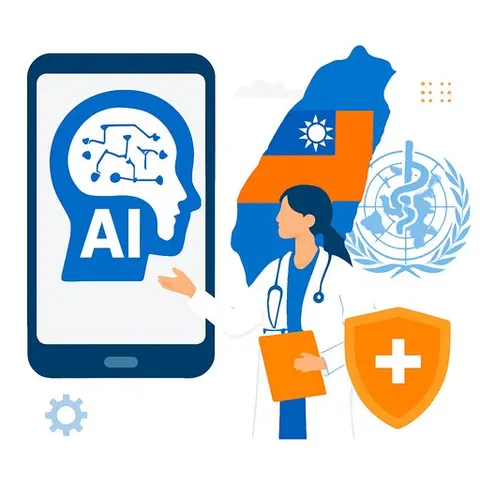
Taiwan Builds National AI Healthcare System as WHO Exclusion Persists
Taiwan is integrating artificial intelligence across its healthcare system through a government initiative called "Healthy Taiwan," designed to address an aging population and workforce shortages. Health and Welfare Minister Chung-Liang Shih announced the effort, which centers on a "3-3-3 Framework" - a digital health platform that connects hospital records, AI governance centers, and international standards.
The system already operates across more than 400 hospitals. Electronic medical records feed into AI tools that predict disease, analyze medical images, and deliver telemedicine to rural areas where doctors are scarce.
What's Already in Place
Two platforms serve as the backbone. MediCloud gives patients and providers real-time access to medical records and medication histories. My Health Bank lets users track personal health data and sync wearable devices - more than half of Taiwan's population uses it.
Taiwan has established 19 national AI medical centers and approved more than 50 AI products for specific tasks: cancer detection, cardiac event prediction, and clinical decision support.
The results are visible in international rankings. Thirteen Taiwanese hospitals made Newsweek's "World's Best Smart Hospitals 2026" list, placing Taiwan second in Asia.
The WHO Question
Shih used the healthcare announcement to renew Taiwan's call for inclusion in the World Health Organization, from which it remains excluded. He argued that cross-border health challenges require inclusive global cooperation and that Taiwan can contribute through digital innovation.
For healthcare professionals, understanding AI for Healthcare and AI Data Analysis is increasingly relevant as systems like Taiwan's become standard practice.