Tanco appoints Ocean Bridge to operate smart AI container port in Port Dickson
Tanco Holdings Bhd has appointed Hong Kong-based Ocean Bridge International Ports Management Co Ltd (OBIPM) to operate and manage its proposed smart AI container terminal in Port Dickson, Negeri Sembilan. The deal is executed through Midports Holdings Sdn Bhd (MHSB), a 79%-owned subsidiary of Tanco; the remaining 21% is held by Global Marque Logistics Sdn Bhd. MHSB's directors include Datuk Seri Andrew Tan Jun Suan, Datuk Wira Chuah Lim Leng and Edwin Tan Kium Suan.
What's being built
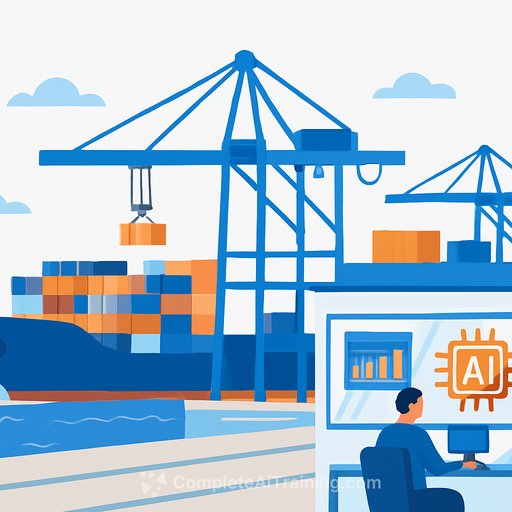
The terminal will sit on a 480-acre Tanco-owned site with natural deepwater access exceeding 21 metres, allowing calls from the world's largest container vessels. OBIPM will run day-to-day terminal operations via MHSB as the operating platform, while asset ownership and disposal rights stay with MHSB. Profits and losses from operations will be borne by MHSB.
Scope of OBIPM's mandate
- Operate and manage the terminal and related assets for efficiency and profitability.
- Deploy AI and automation across container logistics transportation, cargo handling, storage, packing/unpacking, agency services and related port activities.
- Provide technical support: terminal design optimisation, feasibility studies, equipment selection/configuration, production technology, operating rules, maintenance standards, organisational setup, personnel training and commissioning.
- Station a dedicated management team to oversee operations, assets/equipment, safety and personnel within the agreed scope.
The agreement does not require approval from Tanco's shareholders or regulators.
Market snapshot
Tanco shares closed at RM1.13 (+1.8%), valuing the group at RM6.93 billion. Year to date, the stock is up 36.14%.
Why this matters for operations leaders
This setup pairs local asset control with an external operator focused on AI-driven workflows. Expect tighter berth planning, faster truck and yard cycles, and fewer unplanned equipment outages if AI and automation are implemented well. Operations leaders can reference practical frameworks in AI for Operations to guide deployment and governance. The deepwater profile and scale position the terminal for mainline calls and transshipment potential, subject to network integration and service reliability.
Execution priorities to get right
- Operating model and SLAs: Define decision rights between MHSB and OBIPM, performance-based fees, and a clear change-control process.
- Data and systems: Map data ownership, retention and sharing. Ensure clean integration between the Terminal Operating System (TOS), gate systems, OCR, yard cranes and safety systems. Establish API standards and audit trails.
- Safety and compliance: Bake safety interlocks into automation logic. Align with maritime cyber guidance from the International Maritime Organization.
- Workforce readiness: Multi-skill operators and technicians for AI-assisted workflows, remote operations, and predictive maintenance. Tie training to certification where relevant.
- Asset strategy: Agree on equipment standards, spares strategy, condition monitoring plan and end-of-life policy to manage total lifecycle cost.
- Vendor risk: Mitigate lock-in with modular tech choices, data portability clauses and periodic performance benchmarking.
Metrics to track from day one
- Vessel and berth productivity (moves per hour), berth on-time performance.
- Crane availability and mean time between failures.
- Yard utilisation, rehandle rate and container dwell time.
- Truck turnaround time and gate throughput.
- Energy use per TEU and incident rates (TRIR/LTIFR).
- Forecast accuracy for yard/berth plans vs actual.
90-day action plan
- Set up a joint PMO with a single source of truth for scope, timelines and risk.
- Baseline current KPIs and agree on target ranges tied to incentives.
- Lock the integration blueprint: TOS, equipment control systems, data pipelines and cybersecurity controls.
- Run a limited-scope pilot (e.g., one berth and yard block) to validate AI-driven dispatching, safety logic and maintenance workflows.
- Publish operating procedures, drills and escalation paths before scaling.
Context and benchmarking
For planning and stakeholder reporting, align throughput and productivity goals with recognised benchmarks such as the World Bank's Container Port Performance resources: CPPI.
Upskilling your team
- If you need structured paths for operations managers adopting AI in logistics and maintenance, see the AI Learning Path for Plant Managers.
- For planners and analysts working on yard and berth optimisation, consider the AI Learning Path for Supply Chain Analysts.
Your membership also unlocks: