
AI news ·
Taylor Swift files trademarks for her voice and likeness to fight AI imitation
Taylor Swift's legal team filed trademark applications for audio clips of her voice and a photo, aiming to block AI impersonations that copyright law can't cover. Legal experts say the filings may deter infringers but could face USPTO scrutiny.
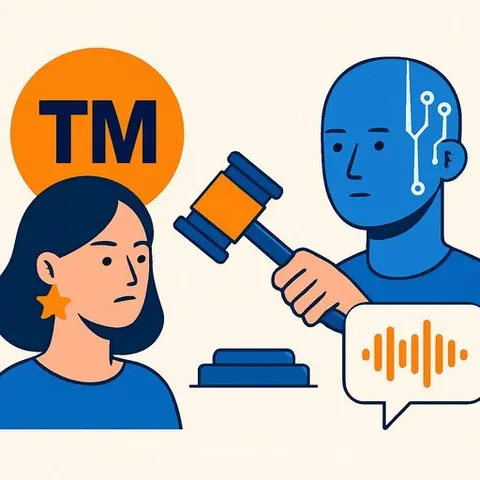
Taylor Swift files trademark applications to combat AI-generated impersonations
Taylor Swift's legal team filed trademark applications last week for two audio clips of the singer saying "Hey, it's Taylor Swift" and "Hey, it's Taylor," along with a photo showing her holding a pink guitar in an iridescent bodysuit. The applications, filed by TAS Rights Management, include recordings from a promotional campaign for her latest album.
While Swift's team has not explicitly stated the trademarks target AI misuse, the timing and nature of the filings suggest that purpose. Swift has faced years of AI-generated deepfakes and voice imitations, making traditional copyright protections insufficient - copyrights protect songs, not voices.
Why trademark law fills a gap
Copyright takedown requests have proven inadequate. Universal Music Group, for example, cited a Metro Boomin producer tag to challenge an AI-generated Drake song, a workaround that targets peripheral elements rather than the core problem.
Trademarks offer a different approach. According to IP attorney Josh Gerben, trademark law could allow Swift to challenge not just identical reproductions but also imitations that are "confusingly similar." A registered trademark creates a federal record that could deter infringers and provide grounds for litigation.
Matthew McConaughey pursued the same strategy earlier this year, obtaining trademarks for video clips including his signature phrase "Alright, alright, alright."
Legal uncertainty remains
Alexandra Roberts, a law professor at Northeastern University, expressed skepticism about whether Swift's audio clips meet the legal standard for a sound mark. Typically, sound marks function as standalone identifiers - like the NBC chimes or MGM lion roar - rather than phrases embedded in longer messages.
The U.S. Patent and Trademark Office may issue preliminary refusals. If so, Swift's team could submit different specimens that better satisfy the use requirement for a mark.
Xiyin Tang, a law professor at UCLA, said trademarks might primarily serve a deterrent function. A federal registration could "warn off unsophisticated infringers" even if the trademark would not necessarily hold up in court against a sophisticated challenge.
Existing legal tools
Swift already has multiple options beyond trademarks. Right of publicity laws, enacted across several states, allow individuals to take legal action against misuse of their name or likeness. Federal law also addresses false advertising and unauthorized endorsements.
Swift maintains numerous trademark registrations for her name, giving her grounds to sue for federal trademark infringement if someone uses her name in a way that creates confusion.
The broader legal landscape
Only Tennessee has passed legislation specifically addressing AI-generated voice imitations of artists. YouTube's deepfake detection tool allows creators to remove AI-generated copies of their faces, but the tool does not yet cover voice synthesis.
In the absence of federal standards, trademark applications represent one tool among several for artists defending against AI mimicry. For legal professionals managing these cases, understanding the intersection of trademark, copyright, and publicity rights has become essential.
Learn more about AI for Legal professionals, or explore the AI Learning Path for Paralegals to understand how AI-related legal issues are reshaping practice areas.