
AI news ·
Teacher argues structured AI exposure builds student resistance to technology dependence
Students who critically examined AI chatbots lost interest in them - no warnings needed. Structured analysis, not prohibition, built their resistance.
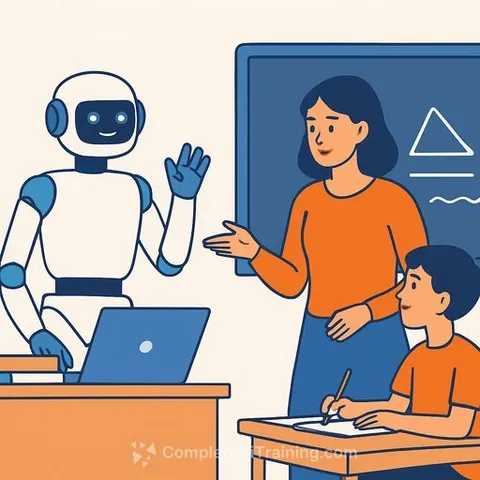
Building Student Defenses Against AI Addiction Through Structured Learning
A writing instructor's experiment with AI chatbots revealed an unexpected outcome: students who interrogated the technology rather than passively consumed it developed their own resistance to it.
When the instructor first assigned a project asking students to examine Character.AI - a chatbot designed to simulate fictional characters - he worried the platform's appeal would hook them. Character.AI offers what many young people find irresistible: a conversational partner that never refuses, never tires, and never challenges.
Months later, when asked if they wanted to analyze another character chatbot, students declined. "That's old news," they said.
The students didn't need warnings or policies about AI addiction. They had reached their own conclusions through hands-on experience with structured, critical engagement.
What AI Literacy Actually Means
This outcome points to a definition of AI literacy that remains unsettled in education: the ability to interrogate AI systems rather than depend on them.
Think of it like vaccine development. A small, controlled exposure to a technology - paired with investigation and analysis - helps build cognitive defenses. The goal isn't to avoid AI. It's to understand how it works and what it can do.
Students who examined chatbots critically developed what might be called "antibodies" against uncritical use. They learned to ask questions about the technology's capabilities and limitations.
Why Research Matters More Than Prohibition
History shows that "just say no" approaches fail. Drug education works. Virus research works. The same applies to AI.
AI companies have financial incentives not to highlight the technology's harms. Without research into how AI affects learning, attention, and decision-making, educators and students operate in the dark.
Engaging with AI in a classroom setting - with guidance and critical analysis - is not capitulation to corporate interests. It's an act of resistance. It's how people develop discernment.
The Case for Monitored Exposure
Physiological resistance develops through exposure, not avoidance. The exposure must be monitored, documented, and adjusted based on findings.
No formal "doctors" of AI literacy exist yet. But educators can function as researchers, testing small doses of AI use in structured settings and observing the effects on student thinking and behavior.
The alternative - ignoring AI's presence while it spreads through schools and student life - amounts to allowing uncontained exposure. That's the riskier path.
What Educators Can Do Now
Start with interrogation. Ask students to examine how a chatbot responds to different prompts. Have them test its boundaries and document what they find.
Build assignments around critical analysis rather than tool use. The goal is understanding, not productivity gains.
Document what works. Share findings with colleagues. The field needs real classroom data about what builds AI literacy and what doesn't.
Consider exploring AI Learning Path for Teachers or Generative AI and LLM Courses to deepen your own understanding of how these systems work - a prerequisite for teaching students to interrogate them effectively.
AI is already in students' hands. The question is whether educators will help them use it with awareness or leave them to figure it out alone.