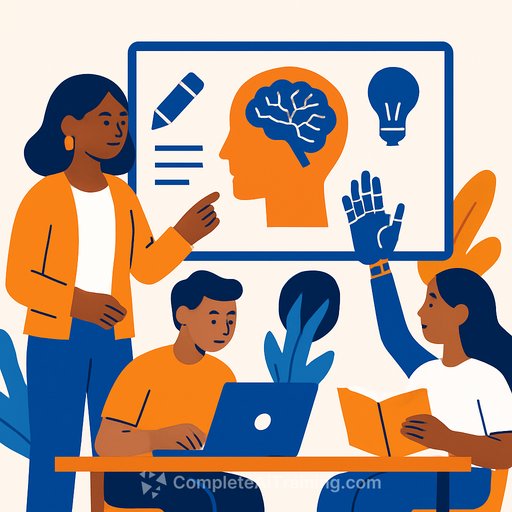
Teaching Creativity and Durable Skills in an AI World
When students use AI to design community murals or collaborate globally on digital storytelling projects, learning is clearly changing. Classrooms have shifted from places of passive information intake to active creative spaces where technology helps solve real problems.
Insights from a Recent Webinar Series
A two-part webinar series, sponsored by Adobe, brought together experts to discuss the intersection of creativity, AI, and student success in K-12 and higher education. Panelists included Melissa Vito (University of Texas at San Antonio), Laura Slover (Skills for the Future), Justin Hodgson (Indiana University Bloomington), Adeel Khan (MagicSchool AI), and Brian Johnsrud (Adobe).
The discussions were inspired by Adobe’s research on how creativity and AI influence student outcomes and career readiness. These leaders shared how innovation is reshaping learning environments.
Essential Skills for the Future
What skills matter most for students, and how are institutions responding?
- Laura Slover: Students should develop durable skills critical for success beyond school: collaboration, communication, creativity, critical thinking, curiosity, digital and AI literacy, growth mindset, leadership, perseverance, self-regulation, and civic engagement.
- Melissa Vito: Higher education’s focus on microcredentials like project management is growing, but key enduring skills such as critical thinking, teamwork, communication, and creativity remain top employer priorities.
- Brian Johnsrud: AI has disrupted the value of some skills—some are replaceable, some augmented. Importantly, AI can help students develop new skills more accessibly.
The Role of Educators in an AI-Enabled World
Justin Hodgson: Faculty are shifting from fearing AI to becoming AI-enabled mentors. The conversation is moving beyond cheating concerns to strategic use of AI in education.
Creativity and AI in Practice
- Melissa Vito: At UTSA, curiosity and experimentation were core values. Faculty and students learned together, with AI serving as an anonymous tutor—especially helpful for first-generation students asking questions and refining ideas.
- Brian Johnsrud: Research shows students rarely practice creativity deeply. AI helps with creative thinking components like problem understanding, brainstorming, solution design, and communication—skills valued in creative industries.
Personalizing Learning with AI
Adeel Khan: AI helps educators save time creating materials and customize them based on students’ knowledge, academic level, and community context. When teachers know their students well and use AI to adapt instruction, learning becomes richer. AI accelerates educator-student relationships.
Understanding AI Literacy
- Brian Johnsrud: AI literacy should be like early media literacy—students must learn to critically evaluate AI content: its creators, design, strengths, limitations, and trustworthiness.
- Adeel Khan: Many young people use AI unknowingly, often first encountering generative AI as a chat “friend.” Schools need to teach AI facts and ethics to foster healthy, critical conversations about AI’s role and limits. AI is a tool, not a companion.
Assessing Creativity and Durable Skills
- Justin Hodgson: If AI can complete a course, the issue isn’t AI but what’s being assessed. Focus should shift from output to learning processes and problem-solving abilities.
- Laura Slover: Traditional courses grade subjects like math or English but rarely assess skills like collaboration or critical thinking explicitly. New approaches are needed to recognize these durable skills.
- Justin Hodgson: Education has become content-heavy and delivery-focused due to standardized outcomes. True expertise involves knowing, doing, and creating within a discipline—skills that should be central to assessment.
Education professionals can support students by embracing AI as a tool to deepen creativity and durable skills. Encouraging curiosity, critical thinking, and personalized learning prepares students for futures where technology and human skills work hand in hand.
For those interested in expanding their understanding of AI in education and developing relevant skills, explore Complete AI Training’s latest courses.
Your membership also unlocks: