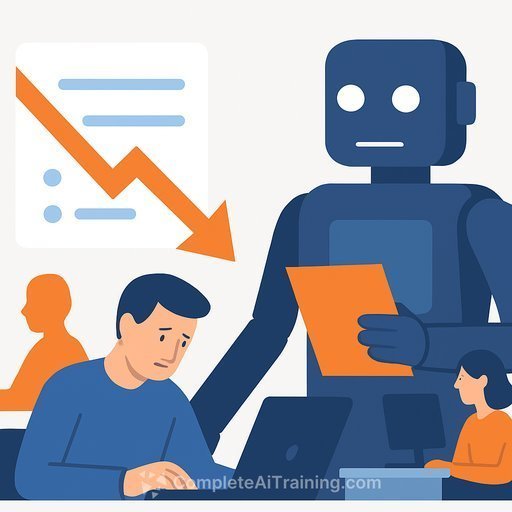
Tech Companies Cut Jobs and Bet on AI, but the Payoff Remains Uncertain
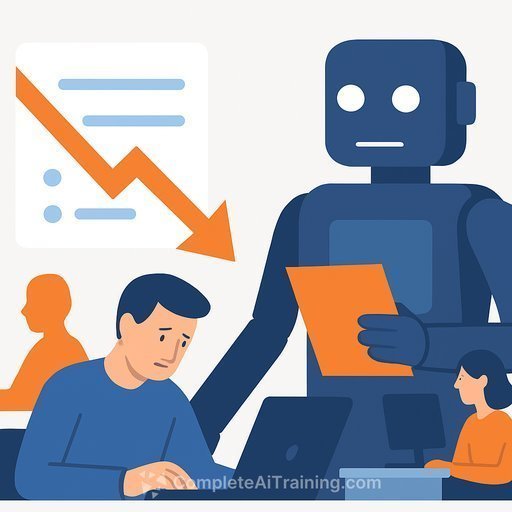
More than 165,000 tech workers lost their jobs in the past year as major companies ramped up AI investments and slashed headcount. Microsoft cut 15,000 workers. Amazon laid off 30,000 employees. Meta may eliminate 20% of its workforce. Block cut 40% of staff in a single month.
The pattern is clear. The question is why.
Tech companies say AI will help them do more with fewer people. But AI researchers, economists, and affected workers paint a messier picture: companies are experimenting with a technology that may not yet deliver on its promises, while using AI as cover for broader business problems.
The Reality on the Ground
Workers tasked with using AI tools describe a gap between executive expectations and actual results. A former Block engineering supervisor laid off in February said AI generates code faster, but human code reviews became a bottleneck. "Now there's three times as much code because it's producing faster," he said. "We were falling behind on reviews."
At Amazon Web Services, a recently laid off senior UX designer said his team was testing two internal generative AI tools, neither fully functional. When cuts came, he was confused. "It felt like, 'None of this is ready yet,'" he said. "How is all this work going to get done?"
Amazon employees reported feeling pressure to use AI even when it slowed their work, according to reporting from other outlets. The company stressed that AI use was not mandatory.
At Microsoft, a former employee said he felt "the feeling of being watched" regarding AI adoption and pressure to "adopt the tech whether we like it or not." He said he could raise concerns if they protected the company, but broader worries about jobs or the environment were unwelcome.
What AI Can Actually Do Now
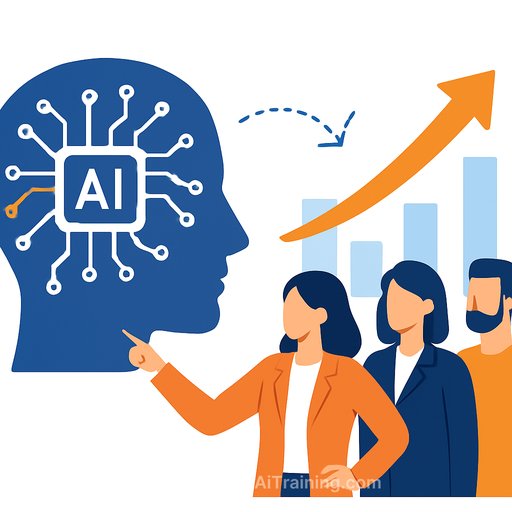
Some companies claim significant gains. Google credited AI for 50% of its code in recent earnings. Block said 90% of code submissions involved AI support.
But AI researchers say the technology has real limitations. Stephan Rabanser, a post-doctoral researcher at Princeton University, said generative AI tools cannot consistently produce the same correct answer using the same prompt. "This is the barrier to job transformation," he said. "Reliability will be a key limiting factor."
Stuart Russell, a UC Berkeley AI researcher, said high-quality training data is becoming scarce. AI systems often respond with confidence even when they lack necessary data, producing wrong answers that can lead to faulty transactions or deleted databases.
Some companies are already shipping products built entirely by AI without human review-what one researcher called "dark factories." This approach carries significant risk. In healthcare, judicial systems, or other high-stakes fields, AI failures can have life-or-death consequences.
Is AI Really Driving the Cuts?
Venture capitalist Marc Andreessen, a prominent AI advocate, recently said large tech companies were simply overstaffed and using AI "as the silver-bullet excuse."
Researchers found little evidence that AI is the primary driver. Ryan Nunn, director of research at Yale University's Budget Lab, said: "We really don't see anything differentially happening with the AI-exposed labor market."
Thomas Malone, professor of information technology at MIT's Sloan School of Management, pointed to a pattern. "There's a long history of overshooting predictions of the impact and adoption rate of new tech," he said, citing the dot-com era and autonomous driving. "I do think many people are overestimating the rate at which jobs will change."
When Pinterest announced a 15% workforce cut in January, it cited AI reallocation. But a Pinterest employee said the real reason was fixing the business. "While I know that AI was one of the reasons cited, I don't think it was the real reason," she said. "They did a thorough review of the entire business."
For Wall Street, the math is simple: fewer workers can mean higher profits per employee. After Block's CEO connected layoffs directly to AI productivity gains, the stock jumped 20%. But the boost faded-two weeks later, stock was down 6% as investors questioned whether the company had cut too deep.
What Comes Next
Ethan Mollick, an associate professor at the Wharton School of the University of Pennsylvania who studies AI, said the situation is complicated. "The maximum hype you have right now, which is that AI is replacing people, is not true," he said. "But it's also not true that AI will never threaten jobs."
Tech workers and HR professionals face an extended experiment. Companies are adopting AI before the technology is fully reliable. Some deployments will fail. Others will succeed, shifting how work gets done.
Mollick said changes will emerge over the next couple of years as AI improves. "It's already changing programming. So it will change jobs and transform them, but we just don't know the job consequences yet."
For now, the honest answer is uncertainty. Hundreds of thousands have lost jobs. Whether those cuts deliver promised productivity gains remains to be seen. Consider exploring AI Coding Courses or AI for Human Resources to stay informed as the technology evolves.
Your membership also unlocks: