Tech Mahindra and Microsoft team up on ontology-driven agentic AI for telecom operators
Tech Mahindra has partnered with Microsoft to launch an ontology-driven, agentic AI platform built to modernise telecom networks, unify data, and automate operations. The goal is simple: fewer silos, faster decisions, and quicker rollout of digital services.
The platform combines Tech Mahindra's telecom expertise with Microsoft's cloud and AI stack to help operators adopt data mesh architecture and advanced analytics. For Operations and Customer Support teams, this translates into cleaner data, automated workflows, and fewer manual handoffs.
Why this matters for Operations and Customer Support
Most operators are still wrestling with fragmented data across legacy systems. This platform creates a unified data layer with an ontology that gives AI agents shared context across network, operations, and customer systems.
- Faster incident handling: Correlate alarms, tickets, and topology to cut mean time to resolve.
- Cleaner processes: Standardised semantics reduce swivel-chair work across OSS, BSS, and CRM.
- Quicker rollouts: Reusable data products and AI agents help launch and scale new services faster.
- Better customer moments: Proactive alerts, smarter routing, and next-best actions at the agent desktop.
How the platform works (in plain terms)
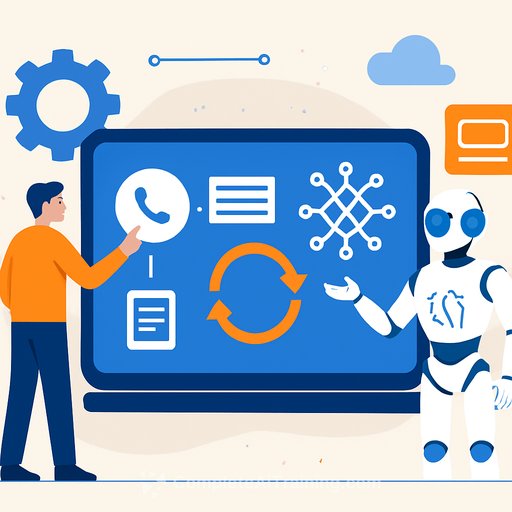
The system uses an ontology-based architecture to structure telecom data across multiple systems. Agentic AI then acts on that data-analyzing performance, managing workflows, and supporting decisions with minimal human intervention.
- Analyze network KPIs, predict capacity issues, and flag anomalies before they hit the contact center.
- Auto-summarize incidents and correlate them with affected customers and services for targeted outreach.
- Standardize data across domains and maintain lineage, so every action is traceable.
Built for data mesh and scale
The collaboration supports a data mesh approach-data managed as products by domain teams, with shared standards. Running on Microsoft's cloud ecosystem, operators can integrate with current infrastructure and scale AI across business functions.
Want a quick primer on data mesh? See this overview from Martin Fowler's site: From Data Monolith to Data Mesh. For Microsoft's AI ecosystem, explore Azure AI solutions.
What you can pilot this quarter
- Pick 2-3 painful journeys: outage-to-ticket, SIM activation, or billing dispute resolution.
- Map domains and owners: network, service assurance, billing, CRM. Define the minimal shared ontology needed.
- Stand up the unified data layer: connectors to OSS/BSS/CRM; data quality checks; PII governance and access controls.
- Launch 1-2 AI agents: root-cause triage, ticket summarization, or next-best action for support agents.
- Set clear KPIs: MTTR, SLA compliance, AHT, FCR, CSAT, and deflection rate.
- Close the loop: human-in-the-loop reviews, exception playbooks, and weekly model feedback cycles.
Customer Support outcomes to target
When network, billing, and CRM data live in one coherent layer, support gets context at the first touch. Agents can see affected services, likely causes, and recommended actions in real time.
- Proactive customer notifications for outages and service degradations.
- Smarter routing that matches issue type to the right skill group the first time.
- Shorter handle times with pre-filled case details and auto-generated summaries.
- Consistent responses across channels with shared policies and knowledge.
Governance you'll need from day one
- Data quality and lineage: define gold sources, freshness SLAs, and audit trails for every agent action.
- Policy guardrails: role-based access, PII redaction, and safe-response policies for AI-generated content.
- Operational safety: rollback procedures, change windows, and rate limits to protect downstream systems.
- Model oversight: performance monitoring, drift checks, and documented approvals for updates.
Questions to put on the table
- Which ontology standards are supported, and how are custom domains modeled?
- How do agents coordinate across incidents, workflows, and customer interactions without conflict?
- What integrations are out-of-the-box vs. custom (OSS/BSS/CRM, ticketing, observability)?
- How are safety, auditability, and data residency handled across regions?
- What's the path from pilot to scale-playbooks, MLOps, and cost controls?
Keep building your edge
If you're driving operational change, see resources on AI for Operations. For support leaders rolling out AI-assisted service, explore AI for Customer Support.
Bottom line: an ontology-driven, agentic AI platform can turn scattered telecom data into a connected, operational engine. Start small, measure hard, and scale what proves value.
Your membership also unlocks: