
AI news ·
Technologist proposes 1% tax on AI companies to fund arts and cultural institutions
A technologist is proposing a 1% annual tax on companies that host AI-generated content, with proceeds funding artists and cultural institutions. The revenue would return money to creators whose work trained the models.
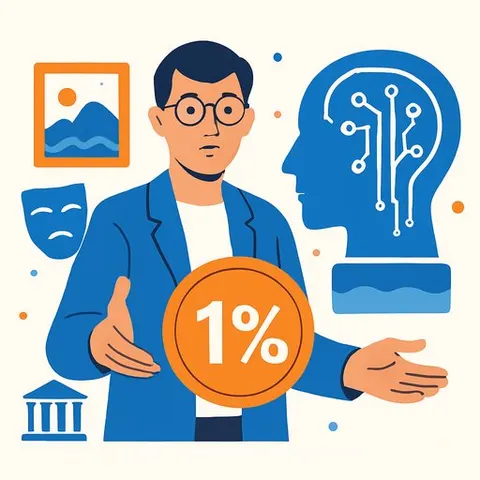
A Tax on AI-Generated Content Could Fund Human Creators
Technologist Mike Pepi proposes a one percent annual tax on companies that furnish or host generative AI content. The revenue would flow into a publicly controlled fund that distributes grants to artists, cultural institutions, and researchers - the same groups whose work trained the AI models in the first place.
AI-generated content, or "slop," now saturates the internet and increasingly appears in physical spaces. Pepi frames this not as an annoyance but as what he calls "malicious manipulation of human cognitive labor and the institutions that support it." Billions of AI-generated facsimiles draw resources away from actual human creatives.
The math works in creators' favor. The largest AI companies are worth trillions of dollars. Even a one percent tax would generate substantial funding for cultural workers and research grants. The rate is low enough that it avoids appearing punitive, reducing industry resistance while still delivering real money to the creative sector.
Pepi argues this approach addresses AI's actual consequences more directly than other proposals. He dismisses calls for an AI "pause" as borrowing from science fiction narratives about sentient artificial general intelligence - a distraction from concrete policy solutions.
What This Means for Creatives
If implemented, a slop tax would redirect AI industry profits back to the institutions and workers the technology depends on. For creatives navigating AI tools, this could mean more funding for arts organizations, research, and direct grants.
The feasibility of such a tax remains uncertain. Implementation would require agreement across jurisdictions and clear definitions of what counts as "generative AI content." But the underlying principle - that companies profiting from extracted creative labor should contribute to supporting that labor - reflects a straightforward economic argument.