
AI news ·
Texas lawmaker says AI and social media weaken critical thinking, calls for tighter school limits
Texas Rep. Jolanda Jones wants to ban AI in public schools through at least the first two years of high school. She argues it erodes critical thinking.
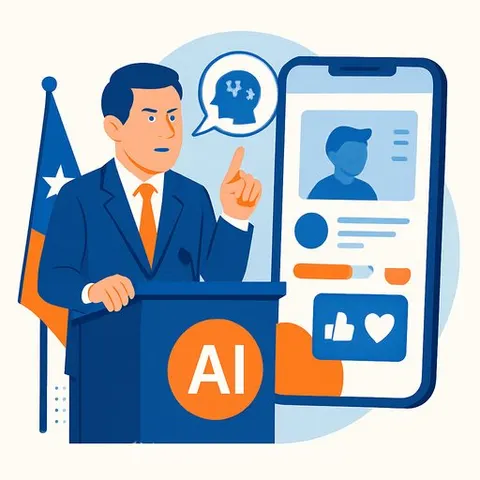
A Texas lawmaker wants schools to pull back sharply on artificial intelligence, arguing the technology is eroding students' ability to think for themselves. State Representative Jolanda Jones, a Houston Democrat, said during a public education briefing that AI is making it too easy for young people to skip foundational skills like problem-solving and writing, and she called for banning its use through at least the first two years of high school.
"I'm not a fan of AI at all, especially in public education," Jones said. "Kids are not using their brains."
A former trustee for Houston ISD, Jones framed the issue as a direct threat to critical thinking. She pointed to tasks that once required mental effort-spell checking, working through a math problem, organizing a written argument-that AI now handles in seconds. "The one thing before AI, you literally had to use your own brain to figure things out," she said. "With the advent of AI, kids don't have to problem solve. They don't have to spell check. They don't have to do anything."
Handwriting as a defense against automation
Jones said she would require students to handwrite assignments if she were running a classroom. Writing by hand, she argued, forces a deeper engagement with the material that typing and AI shortcuts cannot replicate. The proposal is part of a broader push among some educators to reintroduce analog methods as a deliberate check on screen-based learning.
The tension between using AI as a teaching tool and protecting the development of independent reasoning is central to the discussion around AI for Education. Jones does not see a middle ground. She believes the technology should be off-limits throughout elementary and middle school, and ideally into the first two years of high school. "I don't know what the magic age is, but it definitely needs to be through elementary, middle school, and probably the first two years of high school," she said.
Fake citations and the spread to professional fields
Jones also raised concerns about AI's impact beyond the classroom, including in her own profession as an attorney. She cited reports of lawyers submitting AI-generated legal citations that turned out to be fabricated, a problem that surfaced in a widely reported 2023 case where a federal judge sanctioned attorneys for relying on nonexistent cases invented by ChatGPT. "I think AI has literally debilitated the human brain," Jones said.
She questioned whether Texas lawmakers are willing to regulate the technology. "I don't think there are proper protections for students to be taught to actually use their brains," she said. For teachers who want to understand the technology's capabilities and limitations, an AI Learning Path for Teachers offers structured guidance on the tools students are already using.
Social media and the mental health parallel
Beyond AI, Jones linked social media to declining self-esteem among young people. Filters and curated content, she said, create unrealistic standards that drive unhealthy comparisons. "I think social media is really destroying the self-esteem of people," she said.
She also noted a rise in people turning to AI chatbots instead of licensed mental health professionals. "I know people who literally talk to ChatGPT like it's a real person," Jones said. "These AI tools are programmed to tell you what you want to hear."
Jones encouraged news outlets, especially community and ethnic media, to keep reporting on the risks. She said she is considering hosting a town hall to help parents understand how to build critical thinking skills in a technology-driven home environment.
Why this matters for education professionals
Jones's comments reflect a growing split among educators over how aggressively to limit AI in schools. Her proposal to ban AI through early high school goes further than most district policies, which typically focus on plagiarism detection or limited classroom use. Teachers and administrators will need to evaluate whether bans are workable-and whether they address the root problem of students outsourcing mental effort-or whether a more deliberate integration of AI literacy into the curriculum is a stronger long-term strategy. The core tension is not about the tool itself but about what happens to attention, persistence, and the willingness to struggle with a hard problem when the answer is just a prompt away.