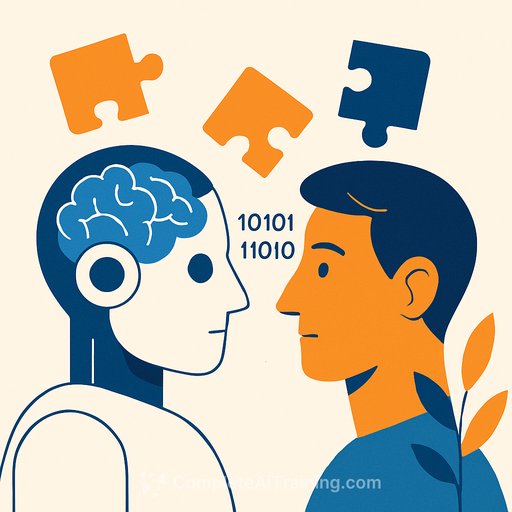
Humans and Migration Through Technological Revolutions
Humans have always migrated—not just across physical spaces but through changes in how we work and think. Major technological changes have pushed us to shift: from farms to factories, from relying on muscle to machines, from analog habits to digital reflexes. These shifts didn’t simply change our jobs; they redefined how we see ourselves and what we consider valuable.
Consider the early 20th century: In 1890, over 13,000 U.S. companies produced horse-drawn carriages. By 1920, fewer than 100 remained. Within a single generation, an entire industry vanished. This wasn’t just about transportation; it displaced millions of workers, altered trades, reshaped cities, and enabled continental mobility. Technological progress arrives without asking permission.
Securing the Super Bowl
Today, with AI advancing, we face a new kind of migration—cognitive migration. This time, displacement isn’t physical but mental. Humans must move away from tasks machines can now handle and focus on areas where creativity, ethics, and emotional insight remain vital. History shows us that every wave of technology demands new skills, new institutions, and fresh ideas about contribution. Each change creates winners and leaves others behind.
The Framing Shift: IBM’s “Cognitive Era”
In October 2015, IBM CEO Ginni Rometty announced the start of the “Cognitive Era” at a Gartner conference. This marked a shift from programmable systems relying on explicit human-coded rules to systems that learn, adapt, and improve over time using machine learning and natural language processing. Unlike earlier eras focused on automation, this one emphasized partnership between humans and machines.
IBM’s Watson, known for winning Jeopardy! in 2011, was presented not as a replacement but as an amplifier of human intelligence—a cognitive co-pilot. This change in framing highlighted how cognitive labor, once thought safe from automation, was now vulnerable. Just as steam engines displaced physical labor, cognitive computing began encroaching on language, diagnosis, and judgment. The announcement was both hopeful and sobering, signaling a migration of minds into areas machines can’t easily master, like meaning-making and ethical reasoning.
The First Great Migration: From Field to Factory
To grasp the current cognitive migration, we must recall past migrations. The Industrial Revolution pulled millions from rural farms into factories. Labor shifted from local and seasonal work to regimented, specialized roles driven by efficiency. This wasn’t just a change in location—it transformed identity.
Village blacksmiths and cobblers became parts of industrial machines. Time clocks and shift work redefined contribution. New skills, routines, and hierarchies emerged. Institutions changed too: education expanded to create literate industrial workers, labor laws adapted, unions formed, and cities grew—often struggling to keep up. This process was messy and traumatic but set a pattern: technology displaces, and society must adapt.
Digital Migration: From Tools to Symbols
The Digital Revolution demanded new cognitive skills rather than physical ones. Starting in the mid-20th century and accelerating through the 1980s and ’90s, computing transformed work again. Mechanical tasks gave way to information processing and symbolic manipulation. Clerks became data analysts; designers became digital architects. Work moved from factories to offices and then to screens in our pockets.
This migration was less visibly disruptive but just as significant. Productivity became about memory, organization, and abstraction. New inequalities arose between those who mastered digital tools and those who didn’t. Schools adapted to teach “21st-century skills,” companies reorganized workflows, and identities shifted from laborer to knowledge worker.
The Most Profound Migration Yet
We’ve moved labor across fields, factories, and digital networks before, each time adapting to a new normal. But the current cognitive migration is unique. It challenges what made us feel irreplaceable—our rational mind. As AI grows capable, the shift isn’t toward harder skills but toward deeper human strengths: creativity, ethics, empathy, meaning, even spirituality.
This migration is the most profound because it’s about more than surviving changes; it’s about discovering who we are beyond what we produce and redefining true value.
Accelerating Change, Compressed Adaptation
The pace of change is faster than ever. The Industrial Revolution unfolded over a century, giving time for generational adaptation. The Digital Revolution compressed this into decades. Now, cognitive migration happens within years, even within a single career.
Large language models (LLMs), for example, went from research projects to workplace tools in under five years. The technology behind AI has also shifted from CPUs executing explicit instructions to GPUs learning from data in parallel—a leap that Nvidia calls “accelerated computing.”
This speed challenges our ability to adapt and demands urgent attention to how we manage transitions.
The Existential Migration
Unlike past shifts, this migration is existential. It requires not just new skills but a fundamental reassessment of what makes us human. We can’t just learn new tools or routines. We must embrace roles where creativity, ethical judgment, and meaning-making define our value.
As AI masters tasks once thought uniquely human, the question becomes: what truly lies beyond automation? The answer points to the essence of being human in an age where intelligence is no longer exclusive.
For those working in IT, development, science, or research, understanding this shift is critical. Continuous learning and focusing on uniquely human skills will be essential. More on preparing for these changes can be found at Complete AI Training.
Your membership also unlocks: