
AI news ·
Three healthtech leaders discuss using AI and automation to improve NHS efficiency and patient care
The NHS holds 7.2 million people on its waiting list. Health tech firms use AI to cut backlogs and reclaim 40 percent of clinical staff time lost to administration.
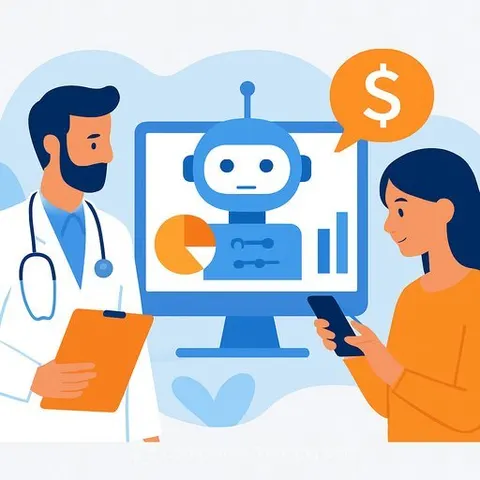
The UK's National Health Service currently holds 7.2 million people on its waiting list, with 99,800 waiting over a year for a doctor. Health technology leaders are now deploying artificial intelligence in diagnostics, clinical documentation, and drug manufacturing to alleviate these systemic backlogs and reduce administrative burdens.
Fixing entrenched workflows
Dr. Lizzie Tuckey, UK Managing Director at Scan.com, said the primary obstacle is not the technology itself, but changing how healthcare operates around it. Scan.com uses AI to review radiology reports for high-risk keywords, providing an extra layer of support for radiologists under pressure. This approach to AI for Healthcare focuses on operational efficiency rather than replacing human oversight.
"It's not about replacing clinical judgement - it's about reinforcing it," Tuckey said. The company has already identified more than 20 cases where this secondary check proved critical.
Democratizing access and reducing admin
Dr. Katie Baker, Director for UK and Ireland at Tandem Health, said regulation is a necessary hurdle that companies must face to build clinically safe systems. Her company provides an AI medical assistant and ambient scribe to reduce clinical documentation burdens. By automating note-taking, tools like these support AI for Medical Records Clerks and clinical staff who currently lose up to 40 percent of their time to administration.
Baker said deploying this technology across the NHS gives patients from any background access to AI-enabled care. "AI does the admin, not the medicine," she said.
Shifting care out of the hospital
Dr. Katie King, Founder and CEO at BioOrbit, is tackling centralised hospital settings by manufacturing drugs in microgravity. This process aims to change how complex cancer treatments are delivered. King said shifting intravenous therapies to self-administered home injections removes barriers for patients and reduces pressure on care capacity.
Why this matters for healthcare workers
Professionals working in the NHS and private care will see artificial intelligence integrated as invisible infrastructure rather than a standalone novelty. Clinicians can expect faster diagnostic escalations and reduced administrative time, provided systems maintain strict data sovereignty and human-in-the-loop oversight. The immediate goal is to return time to patient-facing care and shift routine treatments out of crowded hospital wards.