Tim Cook's Apple: A Legacy Tested by the AI Era
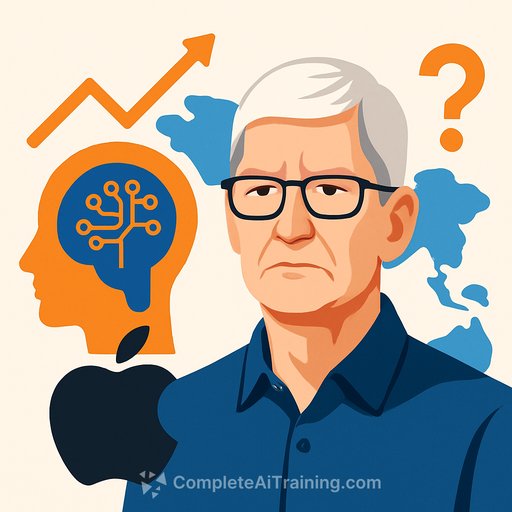
Tim Cook’s tenure as Apple CEO has been one of the most successful in corporate history. Since taking the helm in 2011, he has grown Apple’s market value from around $300 billion to over $3.2 trillion, delivering an impressive compound annual growth rate of 18.4%. In fact, Cook has created more shareholder wealth than Steve Jobs.
Yet, despite this record, recent developments suggest Cook faces significant challenges as Apple enters the AI era. The departure of key executives—chief operating officer Jeff Williams, AI lead Ruoming Pang, and AI researcher Tom Gunter—has raised concerns about leadership stability in a critical innovation area.
Apple’s AI Strategy: Falling Behind Competitors
Apple’s stock has declined 7.2% over the past year, while the S&P 500 and Nasdaq indexes rose 6.5% and 12.9%, respectively. This contrast highlights market anxiety around Apple’s AI performance. The company’s AI effort, branded as Apple Intelligence, launched with much fanfare, but its impact remains limited.
Instead of leading with breakthrough AI products, Apple has taken a cautious approach, partnering with OpenAI for enhanced Siri functionality and exploring other collaborations with companies like Anthropic and Perplexity AI. This strategy appears hesitant compared to rivals that are aggressively integrating AI into their offerings.
AI is a transformative technology akin to the internet or electricity. Companies that fail to lead in AI risk losing relevance. For Apple, which has long excelled at user-friendly innovation, the current lag is a worrying signal.
Product Innovation vs. Process Excellence
Craig Moffett, a respected analyst and Cook supporter, points out that while Apple’s financial success is undeniable, it has relied more on process innovations than on breakthrough products in the last decade. Aside from the AirPods, Apple hasn’t delivered a major new product, relying instead on refining existing lines.
This gap in product innovation becomes critical in the AI age, where the next defining device or platform is unclear. Apple’s longtime design lead, Jony Ive, left in 2019 and is now working with OpenAI, fueling speculation about new AI-driven hardware outside Apple’s portfolio.
Known AI-related products like the Vision Pro goggles and HomePod speakers remain niche or modest successes. If smartphones lose their central role in daily life as AI expands, Apple might lose its dominant position.
What’s Next for Apple Under Tim Cook?
Apple’s secrecy leaves room for optimism. The company could unveil a breakthrough device or make a strategic acquisition that reshapes its AI standing. Such moves could preserve Cook’s legacy as one of the greatest CEOs.
However, if Apple continues to trail in AI innovation, the board may need to consider whether new leadership is required to guide the company through this fundamental shift. The AI era demands a different approach than the one that delivered success over the past 14 years.
Executives and strategists watching Apple’s trajectory should note the importance of aligning leadership and innovation capabilities with emerging technologies. Staying ahead in AI will require bold moves and clear vision.
For those interested in gaining practical AI knowledge to inform strategic decisions, resources like Complete AI Training’s latest courses offer valuable insights into how AI is reshaping business landscapes.
Your membership also unlocks: