
AI news ·
Tomra integrates PolyPerception AI platform into recycling operations with majority stake increase
Tomra Recycling raised its stake in AI firm PolyPerception to 51%, rolling out tools that let operators query plant data in plain language and sort PET trays at 95% purity.
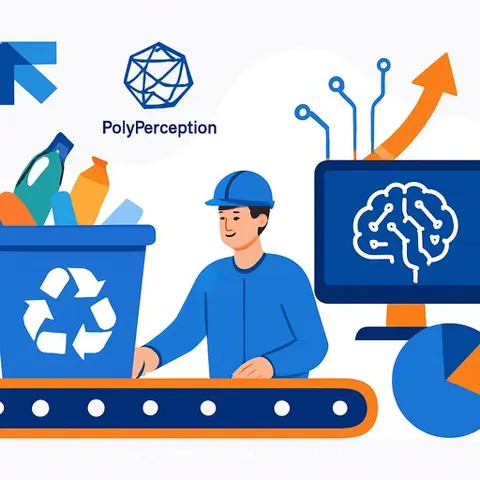
Tomra Shifts Recycling Operations From Sensors to AI Intelligence
Tomra Recycling unveiled PolyPerception's AI platform and two new deep learning applications for sorting at industry conferences in Munich and Amsterdam. The company increased its stake in PolyPerception to 51%, integrating real-time plant data with sorting decisions.
The move marks a shift from traditional sensor-based sorting toward systems that interpret and act on plant data automatically. Operations managers can now query their facilities using plain language instead of navigating spreadsheets.
Natural language replaces spreadsheets
PolyPerception's platform lets operators ask conversational questions like "How did changing the recovery line settings affect our purity?" The system provides immediate answers with supporting data.
Unlike previous tools that only reported data, this platform generates custom quality reports and sets operational alerts without manual intervention. It functions as an active agent within the plant rather than a passive observer.
"Data is no longer just reported - it is interpreted, explained, and transformed into relevant insights in a few seconds," said Nicolas Braem, CEO and co-founder of PolyPerception. "Operators can interact naturally with their plant, ask questions, explore material behavior, and receive clear, actionable answers in real time."
Two search methods handle material variability
Similarity search allows operators to right-click a problematic item - such as an electronic vape - to instantly identify every visually similar object in the stream. This addresses safety hazards like batteries without requiring new model training.
Text and brand search lets users find specific items like "filled refuse bags" or particular brand names passing through the facility in real time.
PET tray sorting reaches 95% purity
Tomra introduced new deep learning applications for its GAINnext system targeting two industry bottlenecks where traditional sorting has struggled.
The first application addresses PET tray sorting. By training the system on thousands of images, it now distinguishes between grocery store trays and consumer or medical packaging based on shape. Purity levels exceed 95%, making food-grade tray recovery economically viable.
A second application handles copper-steel separation in composite materials, though details remain limited.
Operations become data-driven
The platform integrates directly with existing management systems. Managers query waste statistics or purity levels through their own dashboards without logging into separate software.
Lars Enge, executive vice president and head of Tomra Recycling, said the acquisition represents a fundamental change in how plants operate. "We are moving beyond AI as a sorting tool to AI as a central intelligence for the recycling plant," he said.
For operations professionals, this means less time troubleshooting material streams and more time responding to them. The system connects detection directly to action across the facility.
Learn more about AI for Operations and how Data Analysis transforms plant management.