
AI news ·
Travel companies outline their approaches to building versus buying AI
At Phocuswright Europe, Amadeus and Etraveli announced AI acquisitions while Hopper doubled down on in-house builds. Amadeus spends €1.4B on R&D and still bought SkyLink.
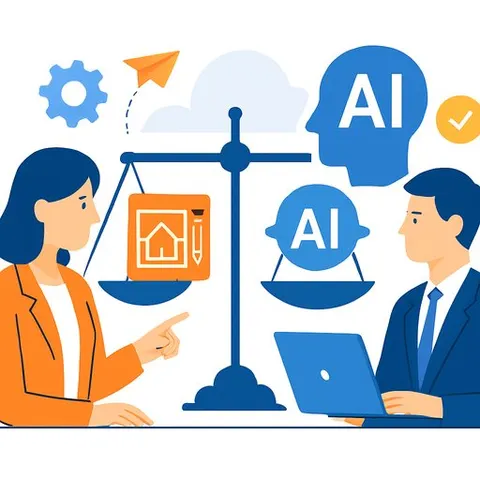
Executives from Amadeus, Etraveli, and Hopper Technology Solutions (HTS) detailed their diverging paths to AI adoption during a panel at Phocuswright Europe 2026, revealing a clear split between those who build proprietary systems and those who buy external capabilities. The discussion centered on concrete acquisition decisions, with two companies announcing purchases this year while one doubled down on in-house development.
Elena Avila, executive vice president of travel distribution at Amadeus, said the company typically builds technology internally, investing €1.4 billion in research and development in 2025. But she noted that strategic acquisitions like the recent purchase of conversational booking specialist SkyLink are on the table when a startup offers "unique capabilities that are distinctive." Avila stressed that SkyLink has proven deployments in corporate travel: "That matters because in AI there's a big difference between big opportunity and big promises versus what's actually deploying."
Etraveli buys Wenrix to tackle hardest automation problems
Etraveli took the buy route with its acquisition of Wenrix, a B2B solution for predictive and agentic AI in flights. CEO Mathias Hedlund explained the logic: "You want to buy someone that can do something better than you do yourselves. We wanted to become more of a B2B company, and here we get the whole industry as customers. That's very important. They also deal with the toughest challenges, they really want to automate the most difficult things."
Hopper Technology Solutions sticks to building
Jo Lai, senior vice president of AI solutions and customer experience at HTS, argued that the complexity of travel demands a custom-built AI platform. "The reality is that to have an AI platform that works at scale within regulations in the ugliest corners of travel is fundamentally a different sport," Lai said. "If you are to build, you need to have a modern technology stack, the talent density, and it needs to be a fundamental part of your moat." HTS has built its AI internally to maintain that advantage.
Lai did offer a clear rule for others: companies lacking the necessary tech stack and talent density should buy the technology and skills outright.
The build-versus-buy debate highlights how companies must align AI strategy with their internal capabilities, a topic covered under AI for Executives & Strategy. The panel also touched on European regulations and the evolving value of brands in an AI-driven marketplace.
Why this matters for executives and strategy
The message for leaders is direct: there is no universal playbook for AI adoption. The Amadeus, Etraveli, and HTS examples show that the right answer depends on whether AI is a core competitive moat or a tool that can be sourced externally. Leaders must honestly assess their in-house tech stack and talent density, then commit to either building deep internal AI expertise or quickly integrating purchased solutions-and avoid the middle ground that wastes time and capital.