
AI news ·
Travel Tech connects five AI travel start-ups with investors at Washington pitch webinar
Five AI travel start-ups pitched to sector investors at a Travel Technology Association webinar on June 5, covering hotel microstays, voice booking, and destination visibility in AI search. The next session is September 16, 2026.
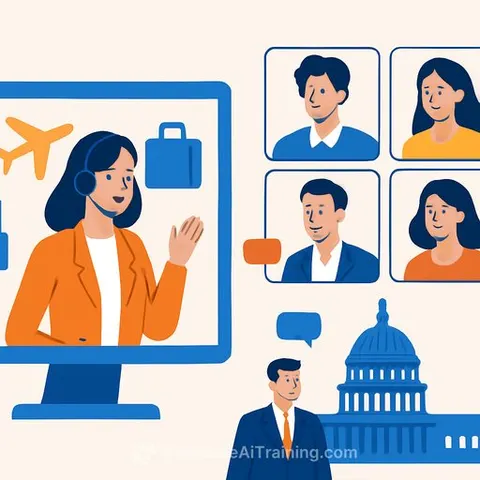
Five AI Travel Start-Ups Get Investor Access as U.S. Travel Tech Pushes Innovation Forward
The Travel Technology Association hosted a pitch webinar in Washington, D.C. on June 5, 2026, placing five early-stage founders in front of angel and seed investors with travel sector experience. The session focused on AI tools that address specific operational gaps: hotel microstays, travel recovery, personalised experiences, proximity-based travel commerce, destination visibility and voice-enabled booking.
The event signals a shift in how AI is being applied to travel. Rather than serving as a support layer, AI is becoming core infrastructure that hotels, destinations and operators use to reach customers, manage inventory and respond to disruption.
What the Five Companies Do
Nappr handles hotel microstays of two to twelve hours, targeting travellers facing layovers, delays or exhaustion during multi-leg trips. The company has completed nearly three thousand bookings across thirty-five countries and plans to add airport sleep pods.
Pintours uses AI to help travel brands coordinate real-world experiences-reservations, transport, events. The company has generated more than two point two million US dollars in revenue since launch and projects seven million US dollars in annualised revenue.
Solutionz embeds travel commerce into CRMs, calendars and contact management systems. This approach reaches travellers when they already show travel intent, potentially lowering customer acquisition costs.
Drifter AI helps destinations understand how they appear in AI-driven search and planning tools. Thirty-two destination marketing organisations across four continents have used the platform to identify visibility gaps.
FleetFare offers voice-enabled booking and service management for small tour operators and local businesses. It integrates with global distribution systems and supports both subscription and booking fee models.
Why Hotels and Destinations Should Pay Attention
Hotels can generate new revenue from unused inventory through short-stay models. Tourism boards can improve how destinations appear in AI search results. Small operators gain access to digital tools previously out of reach.
The underlying issue is fragmentation. Travellers still move between disconnected platforms for booking, planning, recovery and local discovery. Suppliers struggle to appear at the right moment with relevant services. AI tools can bridge these gaps.
Travel demand is shaped by speed and trust. A destination poorly represented in AI engines loses visibility. A tour operator that cannot handle booking queries quickly loses revenue. A delayed passenger without access to rest becomes a retention risk.
The Investor Angle
Travel Tech's Start-Up Membership Program gives early-stage companies access to a community of travel technology experts, quarterly webinars, peer networking and policy insights. The program also connects founders with larger travel technology members for partnership and market validation.
This matters because travel start-ups face challenges that general technology accelerators often miss: legacy system integration, complex supplier networks, regulatory requirements and high customer expectations.
Investors attending the webinar came from online travel agencies, aviation, hospitality technology and destination marketing. This specificity increases the relevance of feedback and the likelihood of follow-up funding conversations.
What Travellers Will See
Hotel microstays offer rest during difficult journeys. AI-powered experience planning makes holidays feel more personal. Better destination visibility helps travellers discover places that match their needs. Voice-enabled booking simplifies access to tours and local services.
The primary benefit is reduced friction. Travel becomes stressful when plans change or information is hard to find. These tools aim to make recovery, booking and decision-making faster.
The Broader Shift
The Travel Technology Association has positioned itself at the centre of a transition in how AI serves tourism. The focus is no longer only on consumer-facing booking tools. It extends to how destinations appear in AI engines, how hotels recover lost demand, how travellers access support during disruption and how small operators compete online.
The United States has long been a centre for digital travel platforms and distribution systems. This initiative suggests the next wave will be shaped by AI infrastructure that sits behind every journey, not just the visible booking interface.
The next webinar is scheduled for Wednesday, September 16, 2026.
For hospitality professionals looking to understand how AI is reshaping operations and customer engagement, the AI for Hospitality & Events resource covers practical applications across hotels, tourism and event management. The AI Agents & Automation guide also addresses how automation is changing booking systems and operational workflows.