
AI news ·
Trump directs federal agencies to stop using Anthropic technology
Trump ordered federal agencies to drop Anthropic AI on February 28, 2026, after it refused Pentagon access demands. The firm has six months to transition its services.
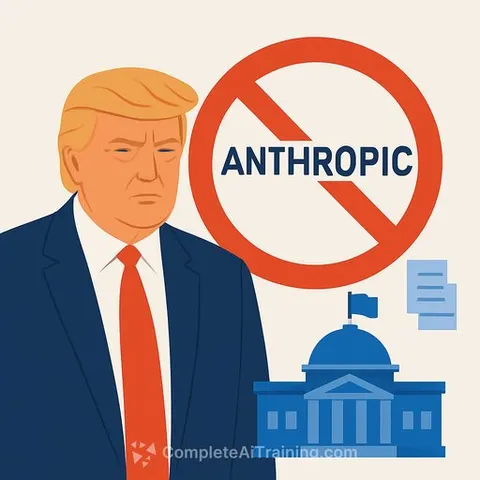
On February 28, 2026, President Donald Trump directed every federal agency to immediately stop using AI technology from Anthropic, escalating a standoff over Pentagon access to the company's tools. The order arrived just before a deadline the Pentagon had given Anthropic to grant unfettered access to its AI systems, which the company refused over concerns about mass surveillance and fully autonomous weapons.
Trump threatens legal consequences during phase-out
Trump announced the decision on Truth Social, writing that federal agencies "do not need it and will not do business with them again." As the Pentagon deadline approached, he released a series of messages saying Anthropic "better get their act together" and be helpful during the transition, or he would "use the Full Power of the Presidency to make them comply, with major civil and criminal consequences to follow."
Pentagon says relationship is permanently altered
U.S. Secretary of War Pete Hegseth responded sharply in a social media post, calling the company's refusal "a master class in arrogance and betrayal" and a "textbook case of how not to do business with the United States Government or the Pentagon." He said Anthropic's relationship with the Armed Forces and the Federal Government "has been permanently altered."
Under the directive, Anthropic will continue providing services to the Department of War for a period of no more than six months to allow a smooth transition. Hegseth added that "America's warfighters will never be held hostage by the ideological whims of Big Tech."
Anthropic stood firm on ethical limits
Anthropic CEO Dario Amodei said earlier this week that he would not bend to the Pentagon's demands. He cited concerns that the company's technology could be used in mass surveillance and fully autonomous weapons. Amodei had said that if the Department of Defense chose to stop using the tools, the company would work to enable a smooth transition to another provider.
Why this matters for Government
The forced break with Anthropic signals that the U.S. government will sever ties with AI vendors that resist operational demands, even when ethical objections are raised. For federal agencies, the decision puts immediate pressure on procurement teams to identify alternative AI systems and renegotiate contracts. The standoff also highlights the growing tension between technology companies' internal safety policies and government access requirements, which could shape future AI for Government strategies. Federal IT leaders must now assess how vendor alignment with defense priorities affects continuity of service and long-term planning.