
AI news ·
Tug industry turns to AI and digital twins as cyber risks grow with connectivity
AI tools are cutting tug fuel costs by up to 20%, but the same connectivity creating those gains is opening new security gaps. Service engineers still load updates via memory sticks, and satellite links add further exposure.
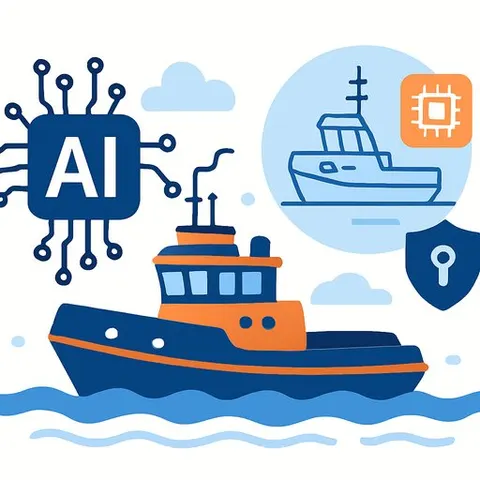
Tug operators face cybersecurity risks as automation spreads across fleet
Shipyards and propulsion manufacturers are deploying artificial intelligence and digital twins to optimize tug operations, but the technology is creating new vulnerabilities that owners and operators must manage.
The shift toward connected vessels brings measurable benefits. Damen Shipyards, Berg Propulsion, and Cetasol presented data at the International Tug & Salvage Convention in Gothenburg showing how data analysis and machine learning reduce fuel consumption, improve engine performance, and enable predictive maintenance.
Cetasol found that tugboat owners can cut fuel consumption by up to 20% using cloud-based AI models that analyze engine performance and flow meter data. The company's tools provide captains and fleet managers with real-time insights on fuel consumption, engine performance, and voyage information.
Berg Propulsion is applying AI and graphical neural networks to propeller design, analyzing operational data from 5,000 propellers across 2,000 vessels. The company uses digital twins to optimize integrated propulsion systems and support maintenance decisions throughout a vessel's lifecycle.
Cybersecurity becomes operational priority
The downside is straightforward: more software, more connections, more risk.
Pam van Zaanen, digital integration leader at Damen Shipyards, said that automation introduces cybersecurity vulnerabilities through satellite communications, cloud connections, and outdated update procedures. Service engineers still use memory sticks to load software and firmware updates onto vessels, creating potential entry points for threats.
The proliferation of onboard software and data traffic requires new strategies for integration and maintenance to keep vessel operations secure and reliable, van Zaanen said.
For operations teams, this means treating connectivity as a security decision, not just an efficiency gain. Owners considering alternative fuels or hybrid propulsion can now use simulation tools to test scenarios before committing to capital investments-but only if their systems remain protected from external threats.
The tug industry is moving faster toward digitalization than cybersecurity frameworks can keep pace with. Operations professionals need to understand both the performance benefits and the attack surface their vessels now present.
Learn more about AI for Operations to understand how to integrate these tools safely into your fleet.