
AI news ·
TV writers bring their AI fears to the screen in "Hacks," "The Comeback" and more
TV writers are channeling their fears about AI into storylines across "Hacks," "Abbott Elementary," "The Pitt," and others. The plots mirror real anxieties from the 2023 WGA strike over jobs and creative control.
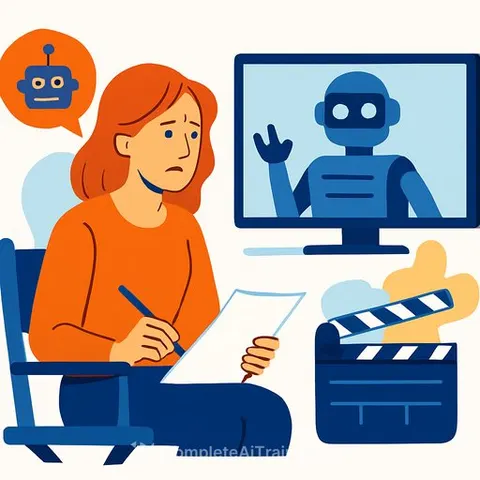
TV Writers Are Writing About AI-Because They're Terrified of It
Television writers are processing their fears about artificial intelligence the same way they process everything else: by putting it on screen. Shows like "Hacks," "The Comeback," "Abbott Elementary," "The Pitt," and "Matlock" are now grappling with AI's arrival in Hollywood, medicine, education, and grief-often reflecting the anxieties of the writers themselves.
In the final season of HBO's "The Comeback," Lisa Kudrow's character Valerie Cherish lands a network sitcom written entirely by AI. The show quickly exposes the technology's limits: it generates predictable jokes, and when asked to write a second episode, it produces a nonsensical plot that puts Valerie's character in jail for no narrative reason. The network executives shrug and move forward anyway.
Series creator Michael Patrick King said the goal wasn't to demonize AI but to report what's actually happening. "We know we can report from the battleground," he told TheWrap.
The Writer's Dilemma
In "Hacks," HBO Max's comedy about a legendary comedian and her young writer, the final season features a venture capitalist trying to buy Jean Smart's character's standup archive to train an AI language model. Smart's character ultimately rejects the deal-not for moral reasons, but because she refuses to take shortcuts in her own work.
Co-creator Jen Statsky said tackling AI felt "scary" given how quickly the technology changes, but it reflected genuine conversations her characters would have. "We had a strong POV, and we felt Deborah and Ava would have strong POVs," Statsky said.
The show's writers weren't inventing conflict. During the 2023 WGA strike, writers rallied around AI protections, fearing the technology would compromise their work and eliminate jobs. Though they won additional guardrails in their new contract, many in Hollywood still see AI as an existential threat.
Beyond Hollywood
AI anxieties extend beyond entertainment. In HBO Max's "The Pitt," a medical drama, doctors debate whether to rely on AI transcription software for patient notes. The answer comes when the AI mistranscribes a word, leading to an incorrect lab order that nearly puts a patient on dangerous treatment.
Real hospitals have faced lawsuits over botched surgeries involving AI, and studies show AI language models designed to predict patient mortality struggle to detect worsening symptoms. The show's conflict isn't invented.
ABC's "Abbott Elementary" tackled AI's threat to education in its season finale, with teachers fighting to save their jobs from a school considering AI-powered online classes. Co-showrunner Justin Halpern said the show has been addressing AI since schools started dealing with ChatGPT three years ago.
AI as Grief
CBS's "Matlock" and Prime Video's "Scarpetta" took different approaches, using AI to explore how people process loss. In "Matlock," Kathy Bates's character talks to an AI bot mimicking a deceased loved one-a plot that showrunner Jennie Snyder Urman used as a metaphor for addiction, showing how easy it is to do something you know isn't quite right.
In "Scarpetta," Nicole Kidman's niece becomes consumed by conversations with her dead wife through an AI avatar. Other characters wrestle with whether this helps or harms her grieving process.
The Audience Question
Kudrow said audiences will ultimately decide whether AI storytelling works. Younger viewers can already detect AI-generated content more reliably than older audiences, and they don't like it.
"The audience will let you know," Kudrow said.
Television has always served as a medium for mainstream audiences to process new ideas-from affluent Black families in "The Jeffersons" to the rise of reality TV in the original "Comeback." In 2026, that spotlight is on AI. Writers aren't waiting for the technology to fully reshape their industry. They're examining it now, on screen, while they still have a say in the story.
For creatives concerned about AI's impact on your work, understanding how these technologies actually function-and their real limitations-matters. AI for Creatives and AI for Writers resources can help you navigate these changes.