UAE CEOs fear AI will damage their legacy if they don't get it right
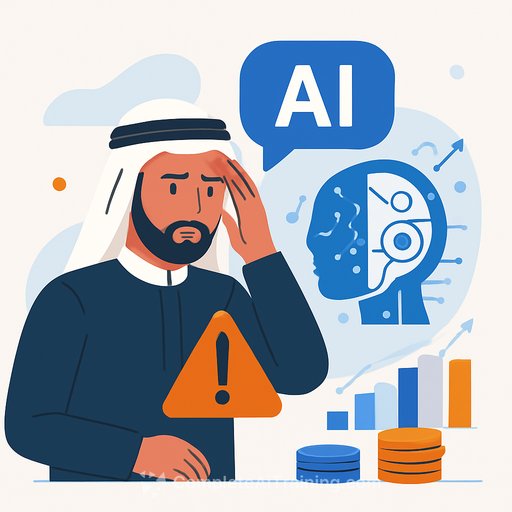
Twenty-three percent of chief executives in the UAE say artificial intelligence threatens their long-term legacy, more than double the 10 percent global average, according to a survey of 900 executives across eight countries.
The AI for Executives & Strategy report, commissioned by Dataiku and conducted by Harris Poll, reveals a sharp divergence between UAE executives and their peers globally. The gap points to specific pressures unique to the region.
A control problem
UAE CEOs report a disconnect between what they feel responsible for and what they can actually control when implementing AI. About one in five said their chief data officer has the greatest influence on AI strategy - more than three times the global average of 6 percent.
Kurt Muehmel, head of AI Strategy at Dataiku, attributed this to the UAE's decade-long focus on AI as a policy and economic priority. "They're operating in a context where AI is at the top of the policy and economic agenda," he said.
The country recently ranked first for AI adoption in Microsoft's annual AI economy report, attracting significant investment from US technology companies.
From fear of falling behind to fear of accountability
The survey tracked a shift in CEO concerns year over year. In 2025, executives feared being left behind by competitors. In 2026, they fear something different: being held accountable for AI outcomes.
Muehmel said the pressure stems from corporate boards and the expectation that CEOs demonstrate AI is increasing efficiency and improving productivity. "There's this feeling that you can't be the one CEO that's concerned about how it's going," he said.
The survey was designed to move beyond surface-level statements about AI and uncover genuine executive concerns. Muehmel described the candid responses about AI success worries as "really refreshing."
High ambition, lower confidence
UAE executives maintain high ambitions for AI adoption, but confidence in the upside has declined. Awareness of downside risks is significantly more pronounced than a year ago.
AI is no longer treated as innovation theater. It has become a performance mandate that executives will be judged on, regardless of how much control they actually have over implementation.
For more on how executives can approach AI strategy and implementation, see the AI Learning Path for CEOs.
Your membership also unlocks: