
AI news ·
UAE launches AI project to screen work permit applicants and improve labor market efficiency
The UAE has launched an AI system to screen work permit applicants using algorithms that assess skills, education, and experience. It starts in early May, as the country works to stabilize its workforce after recent expatriate departures.
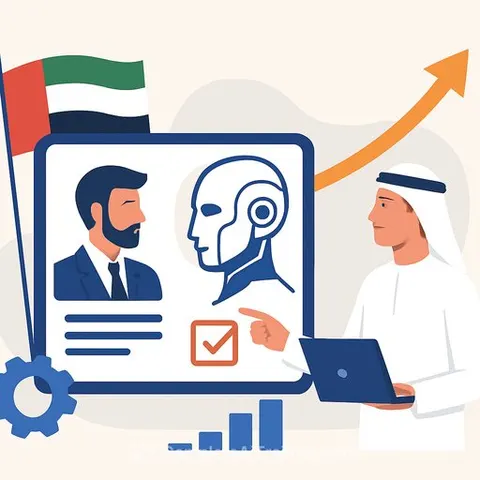
UAE Launches AI System to Screen Work Permits and Boost Labor Productivity
The UAE's Federal Authority for Identity and Citizenship, Customs and Port Security has launched an AI-driven project to streamline workforce management, partnering with the Ministry of Human Resources and Emiratization. The system will begin operations in early May.
The project uses smart algorithms and robotics to evaluate work permit applicants based on professional skills, education level, experience, and acquired knowledge. It aims to make screening faster and more objective than current methods.
The government plans to integrate agentic AI models into its operations within two years, aligning with the UAE's broader digital transformation strategy. This effort is part of a push to build a knowledge-based, innovation-driven economy.
Why Now?
The UAE has faced labor market pressure recently. Geopolitical tensions prompted significant numbers of expatriates to leave the country, including one in eight British residents. Nearly 90% of the UAE's population-between 9.2 and 10 million people-are foreign workers, making talent retention critical.
The new system targets skilled professionals and aims to position the UAE as a competitive destination for global talent amid shifts in how work is organized worldwide.
What This Means for Government Work
For government employees, this signals a shift toward automation of routine screening tasks. Staff may find their roles shifting from manual application review to oversight and decision-making on complex cases that algorithms flag for human judgment.
Understanding how AI Agents & Automation functions in government operations can help workers adapt to these changes. Those in government roles focused on immigration, labor policy, or workforce planning should consider how AI will reshape their day-to-day responsibilities.
For more context on how governments are deploying AI, explore resources on AI for Government.