UAE will need one million new workers by 2030 as AI and growth accelerate
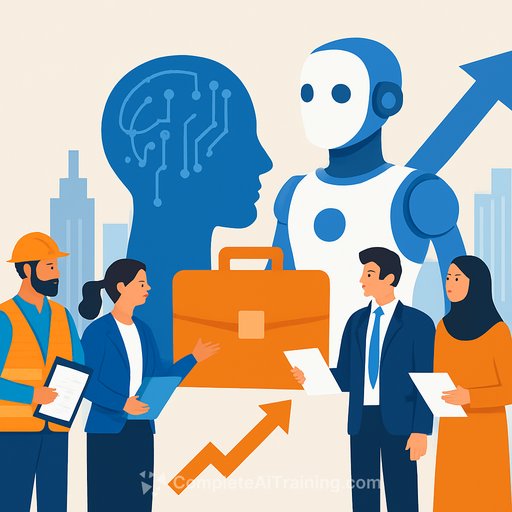
The UAE faces a hiring surge of 1.03 million additional employees by 2030, a 12.1% increase in total employment that outpaces growth in the United States, United Kingdom and India, according to analysis from ServiceNow and Pearson.
Economic expansion, digital transformation and AI adoption are driving the demand. The growth rate dwarfs comparable markets: the US is projected to add 2.1% to its workforce, the UK 2.8%, and India 10.6%.
Where the jobs will be
Manufacturing will add the most positions with 133,000 new jobs. Education follows with 78,000 roles, retail with 60,000, financial services with 40,000, and healthcare with 39,000.
Energy and utilities, projected to grow by 33%, will expand to support renewable energy, smart infrastructure and sustainable development.
Technology roles will surge by 54%, requiring more than 91,000 additional technical specialists in software engineering, data analytics, cybersecurity and digital marketing.
The reskilling imperative
The hiring volume will force a shift in how companies approach talent development. Investment in reskilling programmes, AI literacy and technical training will accelerate across the public and private sectors.
Employers are moving beyond simple headcount expansion. They are exploring how AI agents can handle repetitive work while employees focus on higher-value tasks. This hybrid model-combining human expertise with technology-is expected to improve efficiency across organisations.
Seven out of ten employers already struggle to find full-time employees, according to the Society for Human Resource Management. AI-enabled HR tools will reduce administrative work, freeing HR teams to focus on strategy and employee engagement.
What this means for HR strategy
Recruitment is shifting toward skills-based hiring models that combine external hiring, internal mobility and reskilling, supported by AI-driven workforce planning tools.
HR departments will need integrated systems for payroll, analytics and workforce management to scale efficiently. Real-time insights into skills gaps, career progression and employee readiness will become essential.
Strategic workforce planning must anticipate future skills demand and align hiring with long-term business goals. The challenge is not simply adding headcount but building a workforce capable of scaling with speed and flexibility as AI becomes embedded in daily operations.
To stay ahead of these trends, HR professionals should develop expertise in AI for Human Resources, including recruitment automation, talent management and workforce analytics. HR leaders may also benefit from the AI Learning Path for CHROs, which covers AI strategy, workforce analytics and recruitment automation.
Your membership also unlocks: