This Bespoke AI Tutor Helps Students Learn
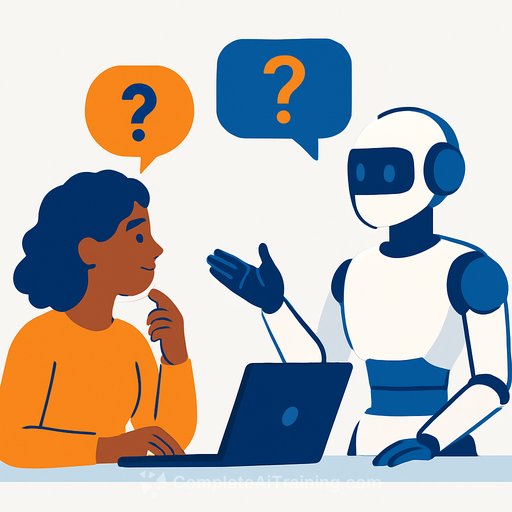
A research team at the University of California San Diego has developed an AI tutor that offers students a focused alternative to generic AI tools. Unlike broad large language models such as Google Copilot or ChatGPT, this tutor supports active learning by guiding students through course-specific content rather than simply providing answers.
Mohan Paturi, a lead researcher and professor in UC San Diego’s Computer Science and Engineering Department, emphasized the importance of learning facilitation over answer delivery: “Students will use AI for their assignments, but those tools do not necessarily facilitate learning.”
The AI tutor builds upon an existing large language model, retrained with a blend of course materials including notes and podcasts. Crucially, it is programmed never to give answers outright. Instead, it asks probing questions that encourage students to reach conclusions themselves, reinforcing understanding and critical thinking.
Currently, over 650 students in computer science and nanoengineering courses at UC San Diego have access to the AI tutor through a pilot program. The project originated within the university’s Laboratory for Emerging Intelligence, established in 2024. Recently, California state funding has been secured to expand the deployment of this AI tutor to other universities and community colleges in the San Diego area.
Starting Fall 2025, the AI tutor will be integrated into an upper-division genetics course within the School of Biological Sciences and an introductory programming class at the Halicioglu Data Science Institute. Both are part of UC San Diego’s broader academic offerings.
The goal is to augment, not replace, the support provided by professors and teaching assistants. Unlike human tutors, the AI is available 24/7, providing students with constant access to guidance. The platform’s open-source nature allows faculty to customize the tutor to align with specific course objectives and teaching styles. The development team maintains close collaboration with course instructors and TAs to ensure the tool complements their educational approaches.
“Our goal is to create a tutor that is available any time and anywhere,” said Paturi. “Long term, we want to build an ecosystem of open-source tutors that other instructors can customize to meet course-specific needs.”
The AI Tutor in Action: Nanoengineering and Computer Science
The initial development of the AI tutor was supported by a workforce development program at the UC San Diego Qualcomm Institute, along with seed funding from the Computer Science and Engineering Department. This support enabled collaboration with a group of interns focused on building a large language model-based AI tutor called SmartLearning Hub.
The AI tutor’s first test was in NANO 11: Introduction to Nanoengineering, a course designed to introduce students from diverse backgrounds to nanoengineering fundamentals. The tutor helps instructors support students with varying levels of prior knowledge, meeting them where they are.
Robert Ramji, a Ph.D. student who trained the tutor and co-authored the course textbook, explained the importance of equitable access: “We have a responsibility to serve all the members of our student body equitably.”
Students used the tutor for reading assignments and problem sets, benefiting from features such as on-the-spot clarifications, elaborations, and additional examples, all accessible within the same browser window. The tutor also offered sample problems and guided students through them at their own pace. By submitting a short bio, students could receive responses tailored to their specific interests, such as chemical engineering or materials science. The positive outcomes prompted instructors to consider increasing course difficulty in future iterations.
The AI tutor was later deployed in CSE8, an introductory programming course, where half of the students are non-majors. Programming can be challenging for beginners, so the tutor offers targeted help during assignments. Students interact with the tutor via a dialog box embedded in their browser. The tutor understands expected outputs and can identify coding errors, guiding students through relevant course materials to correct their work.
Student Perceptions
Feedback from students has been predominantly positive. Nearly 70% of those in the nanoengineering and computer science courses rated the AI tutor as an effective or highly effective learning tool.
- “I like how [the] AI tutor did not give me the answer immediately, instead it gave me tips to improve my code to get to the answer so it really made me learn.”
- “[The AI tutor] allows me to take mental and physical notes on the material and learn from my mistakes and feel accomplished after finishing assignments.”
Some students preferred using the AI tutor because it removed the embarrassment of asking questions in person. However, a few expressed frustration that the tutor does not provide direct answers and still prefer in-person help, which remains available.
Student feedback is one part of a broader evaluation strategy. California’s AI Grand Challenge funding will enable an expanded research and education team to deploy more comprehensive assessment tools. This will also extend the AI tutor’s availability to institutions including San Diego State University and community colleges throughout San Diego County during the 2025-26 academic year.
A Laboratory for Advancing AI
The AI tutor project is part of UC San Diego’s Laboratory for Emerging Intelligence (LEI), which develops next-generation AI systems for applications in science, medicine, business, and education. LEI is led by Professor Mohan Paturi in collaboration with Leon Bergen from the Department of Linguistics. The initiative involves faculty from the School for Global Policy and Strategy, UC San Diego Health, and the Jacobs School of Engineering.
For those interested in AI applications in education and research, exploring courses and certifications on AI tools and tutoring systems can provide practical skills to engage with emerging technologies effectively.
Your membership also unlocks: