
AI news ·
UCHealth deploys AI-powered nursing command center across all 15 hospitals to monitor patient deterioration
UCHealth's AI nursing command center now runs across all 15 of its hospitals, scanning patient records to catch signs of deterioration before symptoms escalate. Nurses receive real-time alerts, shifting monitoring from reactive to proactive.
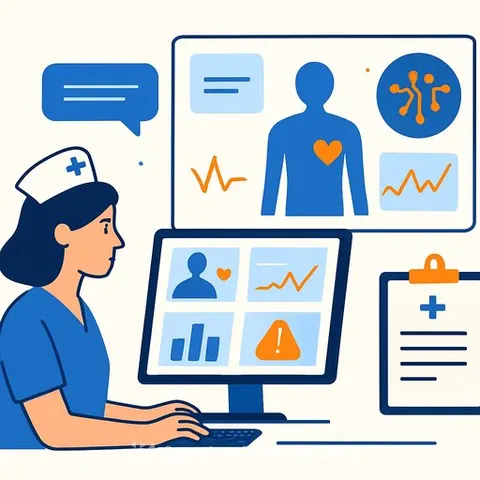
UCHealth Deploys AI Nursing Command Center Across 15 Hospitals
UCHealth built an artificial intelligence system that monitors patient records for signs of deterioration and rolled it out system-wide. The nursing command center now operates across all 15 of the health system's hospitals.
The system scans patient data to flag clinical decline before it becomes critical. Brittany Cyriacks, who leads the project at UCHealth, discussed the deployment at the HIMSS26 conference in April.
How It Works
The command center uses generative AI and LLM technology to analyze patient records continuously. When the system detects patterns consistent with deterioration, it alerts nursing staff in real time.
This approach shifts detection from reactive to proactive. Nurses no longer wait for visible symptoms to escalate before intervening.
Operational Scale
Rolling out the system across 15 hospitals required standardizing workflows and training staff on the new alerts. The full deployment signals confidence in the technology's reliability across different clinical settings and patient populations.
The project addresses a core challenge in hospital operations: patient monitoring happens at scale, and human attention has limits. A centralized command center using AI can process far more data points than individual nurses reviewing charts.
Clinical Impact
Early detection of deterioration typically improves outcomes and reduces emergency interventions. It also affects resource allocation - staff can address issues before they require intensive care.
For healthcare professionals managing patient safety, AI for healthcare applications like this one represent a shift in how clinical teams work rather than a replacement of clinical judgment.
The system depends on nurses acting on alerts. Its value lies entirely in whether staff trust the flags and respond appropriately.