
AI news ·
UConn Law report finds AI tools in housing, lending and employment can worsen racial wealth gap
A UConn Law report finds AI tools used in housing, hiring, and lending are widening the racial wealth gap. Black households held a median $45,000 in wealth in 2022, versus $285,000 for White households.
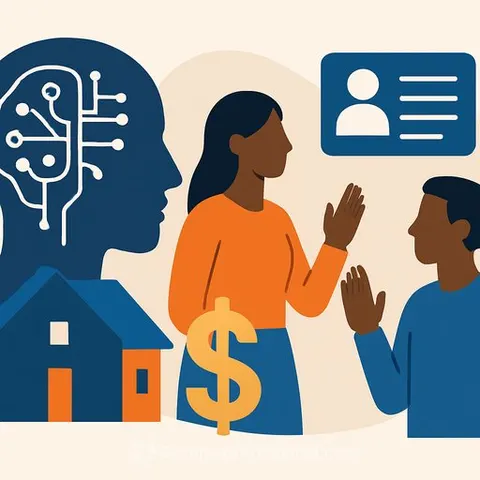
UConn Law Professor Examines How AI Deepens the Racial Wealth Gap
A new report from UConn Law Professor Nadiyah J. Humber shows how artificial intelligence tools used in housing, employment, and lending can unintentionally magnify longstanding inequities. The work, coauthored with Professor Yvette Pappoe of the University of the District of Columbia David A. Clarke School of Law and sponsored by The Leadership Conference on Civil and Human Rights, documents how these systems often operate with limited transparency and little room for human judgment.
The racial wealth divide in the United States is substantial. As of 2022, the median White household held approximately $285,000 in wealth, compared to about $45,000 for the median Black household. Housing, employment, and access to credit are primary drivers of wealth-building, making the growing use of AI in these systems a critical equity concern.
How AI Reinforces Existing Barriers
Renters described automated tenant-screening systems that were difficult to navigate and offered no opportunity to explain individual circumstances. Job seekers reported submitting numerous applications and hearing back from only a few employers, as automated résumé filters relied on criteria shaped by biased data.
These decisions triggered cascading financial strain. Housing delays led to credit-card debt. Prolonged job searches depleted savings. Each setback harmed credit profiles.
"Artificial intelligence is not the enemy," Humber said. "It's a tool. But how it's designed and used matters, and in some cases, it's reinforcing existing patterns of exclusion."
The Path Forward
The report calls for greater transparency, human review of automated decisions, and the use of more inclusive data models. Humber emphasized that AI also presents an opportunity if designed intentionally.
"If the tools were designed differently, more inclusively, they could meaningfully address issues around the wealth gap, opportunities for AI for Legal literacy, wealth creation, housing, and employment," she said.
Legal Education Takes Up the Issue
UConn Law is addressing AI governance through research, teaching, and public engagement. The curriculum includes courses on Artificial Intelligence Ethics and Governance, Artificial Intelligence and Social Impact, Cyberlaw, Data Privacy Law, and Cybersecurity and Privacy Compliance.
Professor Kiel Brennan-Marquez examines whether artificial intelligence can meaningfully replicate forms of legal judgment rooted in discretion, mercy, and moral responsibility-qualities that resist formalization even as legal systems increasingly rely on rule-based technologies.
Matthew Lowe joined the faculty as a Visiting Professor from Practice, bringing experience in AI governance, privacy, and cybersecurity from his work as in-house counsel in the technology sector.
The Law School's Insurance Law Center, led by Director Professor Travis Pantin, hosted a national conference on AI, Insurance Law, and Regulation, convening scholars, regulators, and industry experts to examine how insurance can shape responses to AI risk.