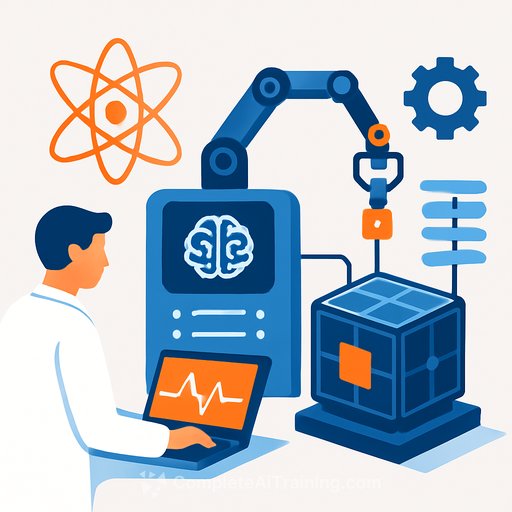
University of Chicago automates quantum research with AI-powered lab
Researchers at the University of Chicago Pritzker School of Molecular Engineering have built an autonomous lab that uses AI and robotics to complete quantum computing experiments in days or weeks instead of months. The system handles the full experimental cycle-gathering materials, running tests, and analyzing results-freeing researchers to focus on higher-level analysis.
PhD student Bill Zheng developed the framework after asking a straightforward question: why not automate the entire process? Assistant Professor Shuolong Yang leads the project, which combines AI and robotic engineering to handle repetitive lab work.
Why this matters for research teams
Data centers consume enormous amounts of energy. The lab's focus on developing new quantum materials and superconductors could reduce that consumption significantly. By compressing months of experimental work into days, the autonomous system lets researchers tackle harder problems instead of repeating routine procedures.
The framework isn't limited to quantum computing. Zheng said the approach can apply to material discovery across multiple fields.
How it works
The "self-driving" lab combines two existing technologies in a new way. Robotics handle the physical tasks-sample preparation, equipment operation, data collection. AI algorithms guide the experimental process, deciding what to test next based on previous results.
This isn't replacement automation. The system augments what human researchers do, handling the time-intensive work that would otherwise consume their weeks.
Current status and funding
The lab operates under a one-year grant but will continue with university support after that period ends. The Pritzker School is the first institution in the Midwest to deploy this type of autonomous research platform.
Learn more about AI Agents & Automation and AI for Science & Research.
Your membership also unlocks: