
AI news ·
University report finds split AI adoption patterns and outlines three-phase recommendations
A university report reveals two distinct AI adoption patterns, with technical fields advancing while humanities lag over data risks. Authors urge a three-phase governance plan.
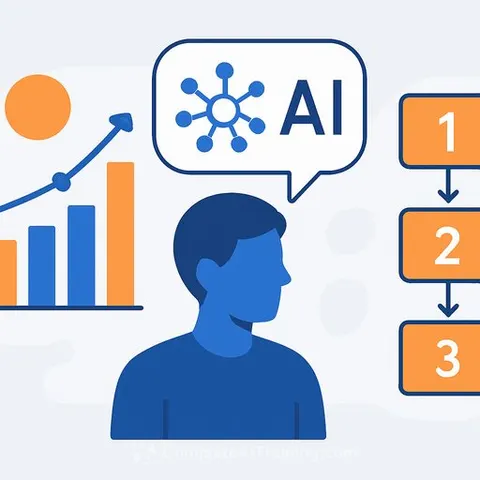
A university report has identified a clear split in how AI tools are being adopted across campus, alongside widespread concerns about the risks they pose. The findings come as institutions face mounting pressure to integrate artificial intelligence into teaching, research, and operations without clear guardrails.
The report does not name the university, but its analysis points to uneven uptake: some departments are moving quickly to embed AI into workflows, while others remain hesitant or resistant. That fragmentation is creating what the authors describe as two distinct adoption patterns - one marked by experimentation and early results, the other by caution and limited use.
Split adoption patterns
In technical and scientific fields, adoption is accelerating fastest. Researchers and IT staff are using AI for data analysis, coding assistance, and literature review, often with institutional support. Humanities and social science departments, by contrast, have been slower to adopt, citing concerns about academic integrity, bias, and the erosion of critical thinking skills.
The report notes that this divide mirrors the broader debate in AI for Education and AI for Science & Research, where questions about appropriate use remain unsettled. Students, too, are caught in the middle - some using AI extensively without faculty knowledge, others avoiding it because instructors have banned the technology outright.
Risk concerns dominate
Faculty and administrators flagged data privacy, algorithmic bias, and the potential for AI to deepen existing inequities as top worries. The report highlights that many institutions lack the policies or training programs needed to address these risks at scale. Without clear guidance, individual departments are left to set their own rules, leading to inconsistent protections for students and staff.
"The uneven approach creates pockets of high risk where AI is used without oversight," the report states, "while other areas miss out on genuine productivity gains because fear has stalled adoption entirely."
Three-phase recommendations
To close the gap, the report lays out a phased plan. The first phase focuses on establishing baseline policies and a centralized AI governance body. Phase two calls for mandatory AI literacy training for faculty and staff, paired with pilot programs in high-adoption departments. The final phase aims to scale successful practices campus-wide and integrate AI fluency into core curricula.
The recommendations emphasize that speed matters - but not at the expense of ethical safeguards. Institutions that delay action risk widening the existing split and leaving students unprepared for workplaces where AI skills are increasingly expected.
Why this matters for professionals in education, IT, science, and research
For educators, the report underscores that AI policy is no longer an optional discussion - it's shaping how students learn and how faculty teach, whether institutions are ready or not. IT and development teams will be on the front line of implementing governance tools and training infrastructure. Researchers and scientists should watch how phased adoption may affect funding, data access, and collaboration norms. The core takeaway: the split in adoption is not sustainable, and the professionals who help bridge it will define how AI integrates into academic work over the next five years.