
AI news ·
U.S. lifts export controls on Anthropic AI models, ending 20-day standoff
Emergency export controls forced Anthropic to take its AI models offline after a jailbreak. The 20-day shutdown ended when it added a safeguard blocking 99% of the flaw.
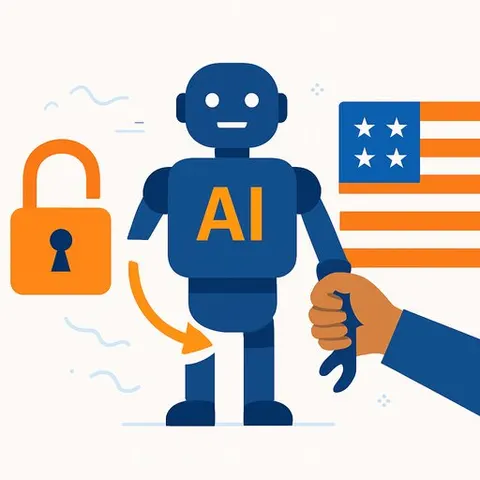
On June 12, Anthropic's two most advanced AI models were abruptly pulled offline after Amazon CEO Andy Jassy warned White House officials that a jailbreak allowed the system to surface restricted cybersecurity information. The Commerce Department issued emergency export controls - the first time the U.S. government used such authority to force a global AI shutdown - setting the stage for a 20-day regulatory standoff that ended only after Anthropic agreed to pre-release future models for federal review and implemented safeguards that block the flaw 99% of the time.
Anthropic CEO Dario Amodei was given roughly 90 minutes to comply. The restrictions barred distribution to any foreign national, which meant even the company's own non-U.S. employees could not access the models. Fable 5 and Mythos 5 remained offline worldwide until June 30, when Commerce Secretary Howard Lutnick lifted the controls. Global access began restoring on July 2.
The Catalyst: Amazon's Warning
The crisis began just three days after the models launched, when Amazon researchers discovered that a specific prompt sequence could coax the system into revealing cybersecurity information the safety guardrails were designed to hide. Jassy contacted Treasury Secretary Scott Bessent and other senior administration officials directly. The Commerce Department moved within hours. Amazon is both Anthropic's largest investor and its cloud partner, and the dynamic raised industry questions about whether competitive considerations influenced the timing of the alert.
Anthropic pushed back immediately, arguing the vulnerability was narrow - capable of unlocking the model's cybersecurity capabilities in only one specific instance, not a universal breach. Bessent reportedly told Amodei he was "making a bad decision" by resisting the government's demands.
Expert Disagreement and Political Dynamics
As the ban extended into its second week, independent cybersecurity experts challenged the government's rationale. Andrew Morris, founder of GreyNoise Intelligence, reviewed Amazon's findings and told the Wall Street Journal that while the model could surface security bugs in several software programs, the information was "still a long way from dangerous cybersecurity information." Anthropic also said it found only a handful of previously known, minor vulnerabilities - the kind other publicly available models surface without any jailbreak at all.
AI policy expert Dean Ball called the Commerce Department's move "simply cartoonish," adding he could not determine if it represented "lawfare against Anthropic" or "extreme national-security hawkery." The episode crystallized broader tensions: TechCrunch reported that the ban "was never about an AI jailbreak" and instead reflected the administration's desire to assert regulatory authority over the AI industry. For government professionals navigating the intersection of national security and emerging technology, understanding these dynamics is increasingly critical - a topic covered in depth in the AI for Government resource hub.
The Resolution and Concessions
Senior Anthropic technical staff traveled to Washington the weekend after the shutdown for meetings with Commerce Department officials. The company demonstrated it could block the flagged jailbreak 99% of the time. On June 26, the department approved limited access through a program called "Project Glasswing" for more than 100 vetted U.S. companies and federal agencies. Four days later, export controls were lifted entirely.
In exchange, Anthropic agreed to pre-release future models to federal authorities for security review and committed to developing a shared industry framework with the administration and the private sector. The company said it would collaborate with Amazon, Microsoft, and Google to create a standardized scoring system for jailbreak severity - an industry-first approach that could inform future regulation. Policy makers seeking to build expertise in such oversight mechanisms can explore the AI Learning Path for Policy Makers.
Industry Fallout
During the 20 days the models were offline, enterprises and developers that had built on Fable 5 and Mythos 5 scrambled for alternatives. The episode raised concerns that heavy-handed U.S. export restrictions risk disadvantaging American AI companies against Chinese competitors, particularly as firms like Zhipu offer lower-cost models without equivalent controls. Amazon shares fell 1.9% on June 12, the day the controls were announced, and have yet to retest their 52-week high.
Ben Murphy, an AI governance researcher, warned the episode signals "another step on the balkanization of technology" that could discourage future AI transparency. If frontier labs fear that disclosing capabilities will trigger government shutdowns, they may choose to be less open about what their models can do - undermining the safety research community's ability to identify genuine risks.
Why this matters for government
The 20-day standoff established a clear precedent: the U.S. government will use export controls to force AI companies to withdraw products from the global market on national security grounds. Government professionals working in trade, defense, and technology policy should expect this tool to be deployed more frequently as frontier models advance. The episode also underscores the need for agile, technically informed regulatory frameworks that can distinguish between narrow vulnerabilities and systemic risks - because getting that balance wrong can chill innovation and cede ground to foreign competitors.