
AI news ·
USC faculty and students debate AI's role in academic integrity at campus forum
USC faculty and students met March 31 to debate AI's effect on higher education. One professor reported office hours visits dropped 80-90% since AI tools became widely available.
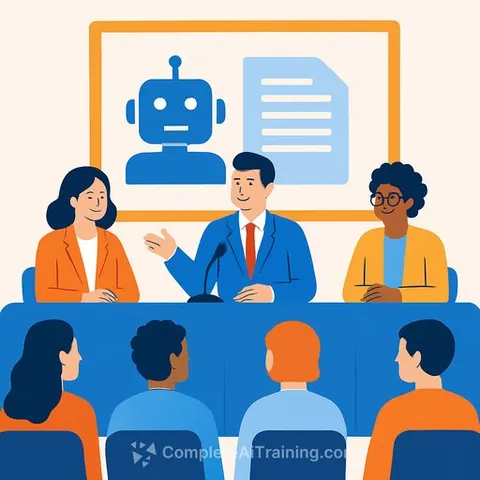
USC Panel Explores How AI Is Reshaping College Teaching and Learning
A study group argument over ChatGPT use became the opening act for a March 31 forum at USC where faculty and students grappled with a practical question: what happens to higher education when AI can write papers, solve problems, and answer questions faster than students can?
The forum, "Learning, Teaching, and AI: A Community Conversation on Ethics and Higher Education in the Age of AI," brought together professors, a student, and administrators to discuss whether AI will break or improve universities. The consensus: it's complicated.
The Classroom Is Changing
Mark Redekopp, a professor of electrical and computer engineering at USC Viterbi, said office hours have become a ghost town. Student visits have dropped 80% to 90% since AI tools became widely available.
"I want students to go through learning experiences, and AI sometimes allows them to bypass the intellectual steps they need," Redekopp said.
He compared using AI as a shortcut to having a personal trainer lift weights for you. The muscle never develops. Similarly, students who turn to AI when problems get difficult miss the moment when they're ready to learn.
Still, Redekopp said he's more excited than he's been in two decades about what classrooms could become. The challenge is figuring out what value the physical classroom adds when students can get answers from ChatGPT Courses & Certifications at home.
Writing Teachers See a Different Threat
Sarah Mesle, who teaches writing at USC Dornsife, bans digital technology from her classroom. She worries that AI-generated prose-generic and smooth-will erode students' individual voices.
"Writing is hard, and it takes tenacity to stay with a difficult challenge," Mesle said. "We need to hold each other accountable to that kind of tenacity."
She said universities shouldn't rush to adopt AI just because it's available. "The role of a university isn't to race to adopt the latest technology - that's not leadership, that's following."
Students Point to Systemic Problems
Ethan Osiegbu, a sophomore studying biology and public administration, said the real problem isn't AI-it's how universities structure grades and incentives.
"If there's a means to take a shortcut, students will take it," he said. "I think this is the fault of the education system putting an emphasis on passing as opposed to innovative and creative learning."
Osiegbu noted the frustration: students who use AI sometimes earn better grades than those who complete work without it. That gap in outcomes pushes more students toward the tool.
What Comes Next
The forum was organized by USC's President's AI Strategy Committee and the Open Dialogue Project, an initiative launched last October to foster academic freedom and open discourse on campus.
Moderator Andrew McConnell Stott, vice provost for academic programs, posed the underlying question: Will AI break the university model by exposing its reliance on memorization and transactional assignments, or will it lead to new forms of learning?
OpenAI CEO Sam Altman has predicted colleges will become obsolete within 18 years. The panelists didn't go that far, but they acknowledged universities need to rethink what they offer.
Learn more about AI for Education to understand how these tools are changing learning environments.