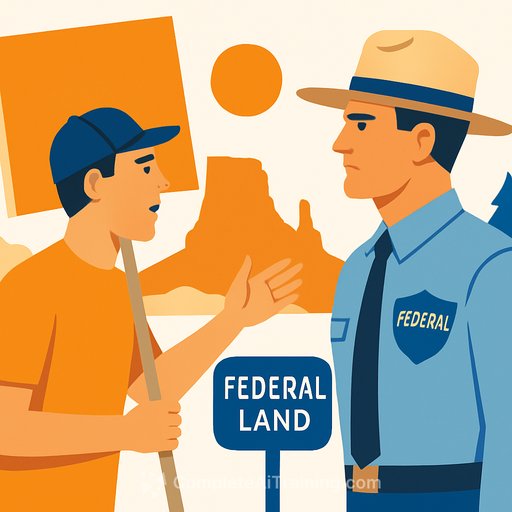
Inside Utah’s PR Campaign to Shift Control of Federal Lands
In 2024, Utah launched a high-stakes public relations campaign to build support for its push to take control of millions of acres of federal public land. Backed by over $2 million in taxpayer funds, the state partnered with Penna Powers, a Salt Lake City-based media and branding firm, to sway public opinion and counter opposition messaging.
The campaign was no accident. Early on, Utah officials studied opposition narratives closely. A key insight came from a video by the Theodore Roosevelt Conservation Partnership featuring hunter and media figure Randy Newberg, who warned that state control would likely lead to selling off public lands. Utah’s PR team knew they had to anticipate and respond effectively to such criticisms, especially since groups like TRCP connect well with conservative audiences.
Crafting the Message: “Stand for Our Land”
Penna Powers developed an extensive media strategy for the “Stand for Our Land” campaign. This included videos, newspaper ads, social media spots, and carefully crafted talking points for politicians. The campaign portrayed the federal government as an absentee landlord that restricts access and mismanages lands, while casting Utah as a responsible steward fighting to protect public access.
Interestingly, the campaign avoided using too many scenic images to prevent the audience from associating the lands with conservation efforts. Internal communications revealed concerns that overly beautiful landscapes might lead viewers to support federal land protections rather than transfer. Instead, the campaign focused on portraying federal agencies as exclusionary and out of touch.
Use of AI and Staged Narratives
The campaign didn’t shy away from controversial tactics. In one case, Penna Powers used artificial intelligence to recreate voice lines for a state legislator who hadn’t delivered specific talking points during filming. In another, a video featured a “disabled camper” portrayed by an actor who, according to publicly available information, does not use a wheelchair. Critics called this portrayal disingenuous and misleading.
Additionally, Utah officials encouraged exaggerating road closure signs in campaign videos to emphasize restricted access. These dramatic visual elements reinforced the narrative that federal agencies are blocking Utah residents from enjoying their lands.
Building Support Amid Opposition
Utah’s push to seize federal lands began over a decade ago with the 2012 Utah Transfer of Public Lands Act. Since then, efforts have intensified, culminating in a 2024 lawsuit filed with the Supreme Court seeking control of 18.5 million acres of Bureau of Land Management (BLM) land. The lawsuit hinges on a legal argument that much of this land is “unappropriated,” challenging federal ownership.
Tribal nations have strongly opposed the lawsuit, labeling it a threat to their lands and sovereignty. Public opinion polls show a majority of Western voters—and even many Utahns—oppose transferring federal lands to state control.
Given these challenges, Utah’s campaign targeted not only local residents but also national decision-makers. Ads ran in local newspapers, on highway billboards, TV, and social media, including targeted digital ads around government buildings in Washington, D.C. The campaign also bought airtime on national platforms, such as the podcast of journalist Bari Weiss, and placed ads in prominent publications like The Washington Post and National Review.
Collaboration Between PR Firm and State Officials
Penna Powers worked closely with Utah’s Public Lands Policy and Coordinating Office (PLPCO). Staff from both sides coordinated messaging, developed video content, and prepared state officials with talking points and op-eds. The PR firm even had access to top state leaders, including the Attorney General’s office and the Governor.
Confidentiality was a priority. Participants in video shoots signed nondisclosure agreements, and internal emails showed a tight collaboration to control the narrative around the land transfer effort.
Criticism and Ethical Questions
Critics describe the campaign as taxpayer-funded propaganda aimed at misleading the public. Conservation groups argue the messaging downplays the true goal: increasing resource extraction and privatizing public lands. The use of AI to alter voices and the portrayal of disability advocates as spokespeople without authentic representation raised ethical concerns.
Utah officials defended their approach, stating the campaign followed a competitive procurement process and adhered to ethical standards. They emphasized their commitment to managing lands responsibly for all users and maintaining public access.
Key Takeaways for PR Professionals
- Understand your opposition: Utah’s campaign began by analyzing opponents’ messaging to anticipate challenges and craft counterarguments effectively.
- Control the narrative through visuals: Strategic choices about imagery—avoiding overly scenic shots—can steer audience perceptions away from unintended associations.
- Use technology carefully: AI can enhance content creation but raises ethical questions when used to alter voices or portrayals without transparency.
- Target audiences precisely: Multi-channel campaigns that include local and national targets, even geo-fencing specific locations, can amplify influence.
- Maintain tight coordination: Close collaboration between PR firms and government officials ensures messaging consistency but requires clear ethical boundaries.
- Prepare for scrutiny: Campaigns tied to controversial political issues will face public and media examination, demanding transparency and accountability.
For PR professionals working in politically sensitive environments, Utah’s campaign offers a case study in strategic communication, audience targeting, and the risks of pushing narratives that may stretch the truth.
To explore how AI tools can support ethical and effective content creation, visit Complete AI Training’s latest courses.
Your membership also unlocks: