AI Tool Ownership Dispute Puts Trade Secrets and Consultant Contracts Under the Microscope
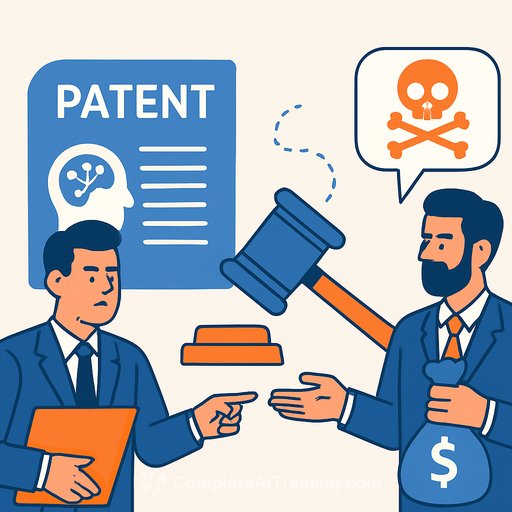
Video technology company VideoLabs Inc. has accused two consultants-Paolo Siccardo and Luc Vantalon-of misappropriating trade secrets tied to an AI-powered patent analysis tool called Turing AI, according to a complaint filed in the US District Court for the Northern District of California.
The filing says VideoLabs acquired patents that listed the pair as inventors, then hired them to help develop related technology. Contracts allegedly assigned all work product to VideoLabs and barred disclosure. Despite that, the consultants claimed they owned Turing AI and sought a large stake by threatening to damage key relationships, the complaint says.
Why this matters for managers
AI projects often mix acquired IP, internal R&D, and contractor contributions. That blend can create gaps in ownership, control, and attribution-especially when inventor-founders are later engaged as consultants.
If ownership isn't airtight, you risk product delays, reputational harm, and costly disputes right when partnerships and customers are watching.
What the complaint alleges
- VideoLabs acquired patents naming Siccardo and Vantalon as inventors.
- The company then hired them as consultants to work on the technology behind Turing AI.
- Contracts allegedly assigned work product to VideoLabs and restricted disclosure.
- The consultants later claimed ownership and, per the filing, threatened to disrupt relationships unless they received a large stake.
Practical steps to protect your AI tools and data
- Nail ownership upfront: Use clear IP assignment and invention disclosure agreements with employees and contractors. Include moral rights waivers where applicable.
- Separate pre-existing IP: Require a schedule of background IP before work starts. Define what's licensed vs. assigned, and on what terms.
- Tight access control: Limit repositories, datasets, prompts, and model weights to least-privilege roles. Log every code, data, and model artifact change.
- Data and model lineage: Track provenance from training data to deployment. Keep a simple "model card" for each major release.
- Vendor rules of engagement: Set service levels, ownership, deliverables, documentation standards, and penalties for noncompliance.
- Exit protocols: On offboarding, cut access, collect devices, certify deletion, and confirm handover of all artifacts.
- Dispute playbook: Define escalation paths, legal contacts, PR response, and a communications freeze to prevent partner or customer confusion.
- Indemnities and forum: Include indemnification, confidentiality, non-solicitation, and a forum/venue clause to reduce ambiguity.
Warning signs a consultant may claim ownership
- Reluctance to sign IP assignment or confidentiality terms.
- Side channels with partners or customers without your team present.
- Ambiguous references to "our" product or code in formal documents.
- Pushback on documentation or code check-ins.
- Withholding access, holding back build steps, or moving work off sanctioned systems.
If a dispute surfaces
- Stabilize operations: Restrict access, rotate credentials, and preserve logs and repositories.
- Preserve evidence: Snapshot code, data, emails, chat, and contract versions.
- Independent review: Commission a third-party audit to map contributions, timelines, and provenance.
- Protect relationships: Inform key partners with a neutral update and a clear continuity plan.
- Legal first, then negotiate: Coordinate counsel, follow the contract's dispute clauses, and explore mediation before deeper litigation.
Quick policy templates worth having
- IP assignment + moral rights waiver (employees and contractors).
- Trade secret classification and handling policy.
- Contributor license agreement (for any third-party contributors).
- AI model card and data lineage documentation.
- Access matrix, audit logging, and offboarding checklist.
Helpful resources for managers
For legal basics on trade secrets, see the USPTO's overview: USPTO Trade Secret Policy. For AI risk practices, the NIST AI Risk Management Framework is a solid starting point: NIST AI RMF.
If you're leading AI initiatives and want structured upskilling for your team, explore curated options by role: Complete AI Training - Courses by Job. For governance, security, and risk management of AI programs, see the AI Learning Path for CIOs. For project governance, vendor engagement, and contract risk in AI tool development, consider the AI Learning Path for Project Managers.
Bottom line: Treat IP and access like production infrastructure-well-architected, documented, and audited. Clear contracts and disciplined controls cost less than a single lawsuit.
Your membership also unlocks: