
AI news ·
Wearables and AI offer more accurate picture of chronic pain than standard scales, study finds
Standard 0-to-10 pain scales miss how chronic pain disrupts daily life, a JMIR study finds. Wearables and AI trackers now offer real-time data that traditional tools can't capture.
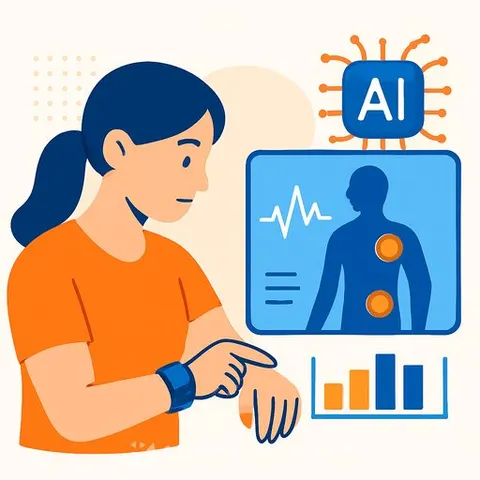
Digital Tools and AI Are Closing the Gap Between Pain Scales and Patient Reality
Standard pain assessment tools fail to capture how chronic pain actually damages patients' lives. A new article in JMIR Publications examines why wearables and AI-driven trackers are reshaping how clinicians measure and treat pain affecting over 20% of the global population.
Patients consistently describe traditional 0-to-10 pain scales and paper questionnaires as inadequate. They cannot express how pain disrupts identity, function, and daily living-the metrics doctors need to justify treatment to insurers.
Why Traditional Scales Fall Short
Paper-based assessments suffer from three structural problems. Recall bias causes patients to misremember pain intensity days or weeks later. Doctors frame pain in physiological terms while patients experience it through functional loss. Fear of being labeled drug-seeking also drives underreporting on official forms.
The result: clinicians work with incomplete data, and insurers reject claims based on incomplete assessments.
Real-Time Data Changes the Picture
Emerging technologies bypass recall bias by recording pain data as it happens. Wearables track physical markers continuously. Apps integrated with patient charts capture journaling entries and tracking data in real time. AI-driven systems transcribe doctor-patient conversations for long-term context. Some tools analyze facial microexpressions to detect pain in patients unable to communicate verbally.
These systems generate the biopsychosocial picture that traditional scales cannot provide.
The Implementation Problem
Hospitals and clinics have not yet integrated patient-generated digital data into electronic medical records. Patients collect rich data through apps and wearables, but that information remains siloed from clinical workflows.
Outcome-based insurance models will force integration. When reimbursement depends on patient outcomes rather than visit volume, healthcare systems will adopt digital tools to measure what actually matters: whether treatment improves a patient's life.
Combining traditional questionnaires with real-time digital insights allows clinicians to treat the whole patient, not just isolated symptoms. That shift requires investment in data integration now.
Source: JMIR Publications, April 2026