Stop Letting Bots Pretend to Be People: A Support Lesson From a Simple Oil Change
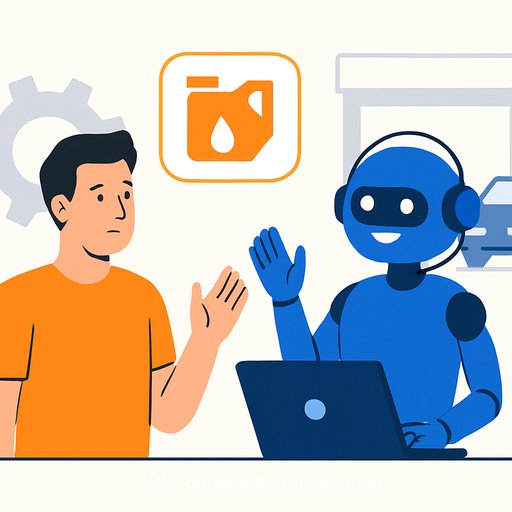
Nick booked an oil change. He got reminders from "Cameron Rowe" with friendly details, hours, and a link to the dealership. All normal-until messages kept arriving after the service was done.
Nick asked a simple question: "Is Cameron Rowe a person on the team?" The "assistant" thanked him for asking, promised to look into it, suggested a call, and then repeated itself-word-for-word-over and over. When he finally asked if it was a chatbot, the reply admitted it was a "virtual assistant." The dealership had given the bot a full name, title, and email signature. That's where trust broke.
Nick later reached a human, Antonio, who confirmed the obvious: Cameron wasn't real. The issue wasn't "using AI." It was pretending AI was a person.
What went wrong
- Deception by design: a bot with a first and last name, job title, and signature.
- No clear disclosure that the messages came from automation.
- Looping, canned replies after a direct question created frustration.
- No fast path to a human when confidence dropped or the customer asked.
- Post-service messaging that ignored context (the oil change already happened).
Why this matters for customer support
Efficiency is good. Trust is non-negotiable. The second a customer wonders, "Am I talking to a human?" you've created doubt that leaks into everything else-pricing, service quality, even safety.
AI can help you scale. But if it's not transparent, it costs you the one metric that drives all others: trust.
Make your AI honest and useful
- Disclose upfront: say it's an automated assistant in the first line of every conversation.
- No surnames, no fake titles, no human-like signatures for bots.
- Offer a human option in every interaction: "Reply HUMAN to switch."
- Answer once, don't loop: cap repeats, escalate on uncertainty or negative sentiment.
- Be state-aware: stop reminders after a service is completed or appointment is checked in.
- Own outcomes: if the bot causes confusion, a human closes the loop and apologizes.
Copy you can steal
- First message: "Hi, I'm the dealership's automated assistant. I can schedule service, answer basics, or connect you to a specialist. Reply HUMAN any time."
- On "Are you a human?": "I'm automated. Want a person? I can connect you now or schedule a call."
- On uncertainty: "I'm not confident I understood that. I'm bringing in a service advisor and sharing this thread so you don't repeat yourself."
Technical guardrails that prevent "Cameron" loops
- Disclosure banner on every bot message thread (not just the first send).
- Intent and memory checks: once the appointment is completed, suppress future confirmations.
- Duplicate-response kill switch: if the last message = next message, escalate.
- Handoff trigger rules: escalate on keywords like "human," "agent," "person," "representative."
- Identity policy: bots use a role (e.g., "Service Assistant"), never a full name or title.
- Max 2 exchanges without resolution before routing to a human queue with SLA.
- Event logging: capture who/what sent each message for audit and coaching.
Team playbook for support leads
- Define who the bot is and what it can't do. Publish a one-page capability matrix.
- Set SLAs for handoffs (e.g., under 2 minutes during business hours).
- Review transcripts weekly for "truthfulness" and "clarity at first touch." Coach with examples.
- Give advisors one-click macros to apologize, acknowledge automation, and resolve.
Metrics that actually tell you if this works
- First-touch clarity rate: percent of conversations where the customer recognized they were chatting with automation from message one.
- Containment with satisfaction: automated resolutions that also score 4/5+ CSAT.
- Escalation quality: handoff time, repetition avoided, and first human resolution time.
- Trust indicators: "Were you clear on who was responding?" Yes/No micro-poll.
Legal and compliance note
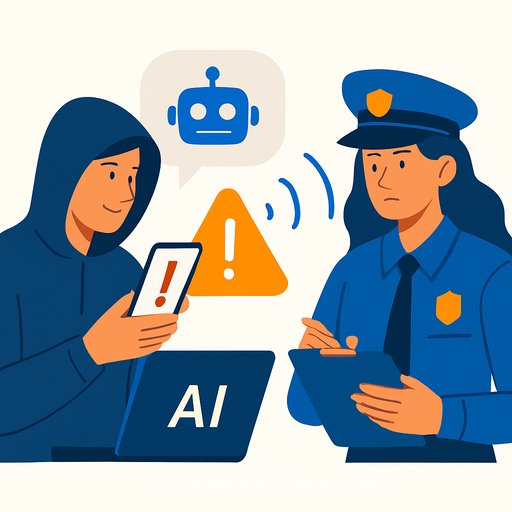
Presenting a bot as a human can cross into deception. If you use AI in customer interactions, keep claims accurate and disclosures obvious. The FTC's guidance on AI and algorithms is a helpful baseline.
Level up your team's AI skills (without losing trust)
If you're rolling out automation in support, train your staff on prompts, handoffs, and disclosure standards. Start with practical, job-focused modules your team can use this week.
The takeaway
If a customer asks whether they're talking to a human, your AI strategy already missed. Say it's a bot. Make getting a person easy. Keep the experience simple, honest, and fast. That's how you scale without breaking trust.
Your membership also unlocks: