Why Groq's Jonathan Ross Wants HR Teams to Code With AI
Jonathan Ross, Founder and CEO of Groq, made a simple point at TechSparks 2025: the value is in applications, not in building yet another giant model. "We don't need 50 different foundational models on the planet. We need two or three."
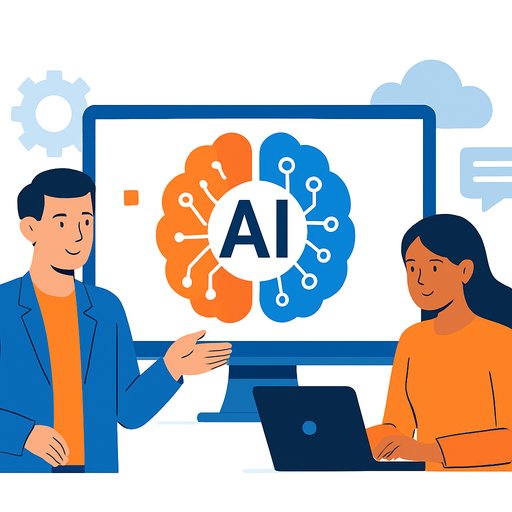
That perspective matters for HR. If writing software is becoming as simple as writing a prompt, then HR isn't just a service function-it's a builder. Ross even noted that Groq's own HR team now codes with AI assistance. None of them were coders before.
What this means for HR
- Treat HR like a product team. Pick pain points, ship small tools, iterate.
- Focus on the application layer: workflows, interfaces, and outcomes-not model research.
- AI shortens the path from idea to working software to days, sometimes hours. Use that cycle time to test and learn fast.
- Protect data: PII handling, consent, audit trails, and bias checks are non-negotiable.
Why urgency matters
Ross pointed to a shift: where one or two startups in a batch used to grow 10% a week, now half of them do. The gap is execution speed. The same advantage applies inside companies. If you can spin up a working HR tool in 48 hours, you change how hiring, onboarding, and internal mobility work.
Historically, those building on the platform made more money than the platform itself. Translate that: your edge won't come from owning a base model-it will come from the tools you build on top of it and how fast you improve them.
A simple plan to make HR "AI-literate"
- Pick 3 high-friction workflows: example-screening, onboarding, policy Q&A.
- Write user stories, not specs: "As a recruiter, I need an auto-generated shortlist with reasons and links."
- Tooling: choose an LLM, an AI coding assistant (e.g., Copilot), and a lightweight database. Keep it simple.
- Data: redact PII by default, keep secrets out of prompts, and build a policy knowledge base for retrieval.
- Security: enable DLP, logging, access controls, and approval steps for any production use.
- Execution: 2-week sprints. Ship a working prototype in 48 hours, collect feedback, improve.
- Skills: teach prompting, basic SQL, and how to read/write simple scripts. Pair non-tech HR with someone technical for reviews.
- Metrics: time-to-fill, candidate NPS, onboarding cycle time, internal mobility rate, and cost per hire. Track weekly.
- Governance: bias testing on screening outputs, documented human-in-the-loop, and clear rollback plans.
What to build first
- Candidate screening assistant: ranks applicants against must-have criteria, highlights risk flags, and explains the "why."
- Job description generator: creates inclusive, skill-first JDs with standardized levels and salary bands.
- Onboarding copilot: personalized checklists, day-1 setup, and automated reminders for managers and IT.
- Policy Q&A bot: answers from your handbook with source citations and escalation to HR when confidence is low.
- Internal mobility suggester: matches employees to projects and roles using skills, performance data, and interest signals.
- Headcount and offer forecasting: scenario plans by team, offer-acceptance probabilities, and budget impacts.
Skills HR should develop
- Prompt patterns: role, task, context, constraints, examples, and evaluation criteria.
- Data basics: SQL for reporting, CSV hygiene, and data joins.
- Light coding: read/edit scripts, call an API, and handle environment variables.
- Evaluation: test sets, accuracy checks, bias checks, and business impact metrics.
- Privacy by design: consent, retention, and access policies embedded in every workflow.
Build on platforms, don't rebuild them
Ross's stance is clear: the platform layer will consolidate; the application layer will create most of the value. That means buy or rent base models and fast inference, then spend your energy on HR workflows and user experience. Groq, for example, offers high-speed inferencing with its LPU chips and API platform for running large language models at scale.
Learn more about Groq. For hands-on upskilling, you can explore AI courses organized by job role here: Complete AI Training - Courses by Job.
Guardrails and fairness
Keep people in control. Any screening or recommendations need clear explanations, audit logs, and an appeal path. Test for bias, document decisions, and involve legal early-especially across regions with different rules.
If you need a reference point for risk management practices, see the NIST AI Risk Management Framework: NIST AI RMF.
The takeaway
"We don't need 50 different foundational models… we need two or three." The rest is execution. Start small, ship fast, measure impact, and keep improving. If HR teams can code with AI, they stop waiting in line and start building what the business needs-this week, not next quarter.
Your membership also unlocks: