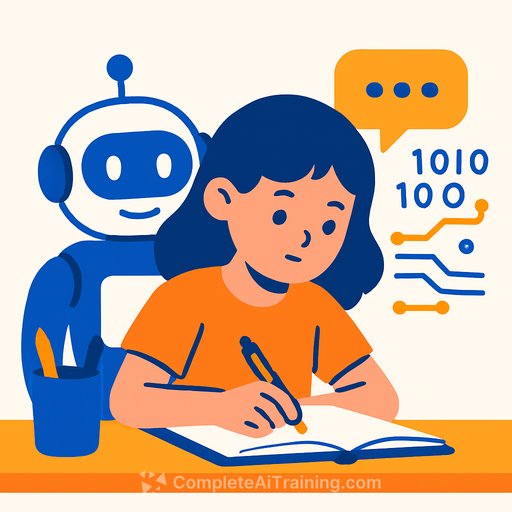
In the Age of AI, Our Kids’ Writing Skills Are More Important Than Ever
As technology advances and AI becomes increasingly prominent, the ability to write well remains a vital skill. Writing is more than just putting words on a page—it shapes thought, sharpens reasoning, and allows meaningful self-expression. Yet, recent findings from a decade-long NAPLAN study by the Australian Education Research Organisation (AERO) reveal a concerning trend: many Australian year 9 students are performing at levels expected of primary school children.
Writing is essential for life, especially for children developing the tools to face challenges and communicate clearly. Beyond communication, writing reflects deliberate, structured thinking. It helps connect and reinforce knowledge over time, which is critical for deep learning. When students struggle with writing, their ability to think critically and solve problems suffers.
AERO’s Response: The School Writing Instruction Framework
To tackle this issue, AERO introduced the School Writing Instruction Framework (SWIF), a program supporting explicit, systematic writing instruction across all subjects. In crowded curriculums with many demands, refocusing on writing is a practical and transformative step. But improving writing skills requires effort beyond schools—it’s a shared responsibility to help young people develop clear thinking and authentic communication.
The Cognitive Benefits of Handwriting
Writing by hand activates multiple brain areas, including motor, visual, and language regions. It demands coordination of fine motor skills, focus, and memory, engaging more cognitive processes than typing. Handwriting fosters kinaesthetic learning and aids retention, which typing does not match. This difference matters, especially as NAPLAN shifted year 5 and year 9 tests online, affecting student performance. Year 3 students still write by hand.
Research also shows students who handwrite notes understand concepts better than those who type verbatim. Cursive writing further supports integration of movement and cognition at a faster pace, highlighting the value of maintaining handwriting skills alongside digital tools.
Writing: A Skill That Must Be Taught
Writing is a lifelong skill that doesn’t develop naturally—it requires explicit teaching. Integrating writing instruction into all subjects and encouraging supportive practices at home can reverse declining proficiency. This approach equips students to think critically, communicate clearly, and engage thoughtfully with the world around them. Adults benefit too: writing strengthens thinking, boosts memory, and keeps the mind sharp at any age.
For educators and writers looking to support developing skills in this area, staying informed on teaching methods and tools is crucial. More resources on AI and education can be found at Complete AI Training.
- Writing reflects deep cognitive processes and critical thinking.
- Handwriting stimulates brain activity and improves retention.
- Explicit, systematic writing instruction across subjects is necessary.
- Collaborative effort from schools and families can improve writing skills.
Strong writing skills remain a cornerstone for clear thought and effective communication in an AI-driven world. Prioritising writing instruction today sets the foundation for confident, capable learners tomorrow.
Your membership also unlocks: