How Brands Can Adapt When AI Agents Do the Shopping
Consumers are starting to skip search bars and hand shopping to AI agents. Ask for "a handmade gift under $100" or "a digital camera for a teen," and a curated list appears-fast and low friction. Beauty, lifestyle, and apparel are moving first. The upside is big, but so is the risk if trust breaks.
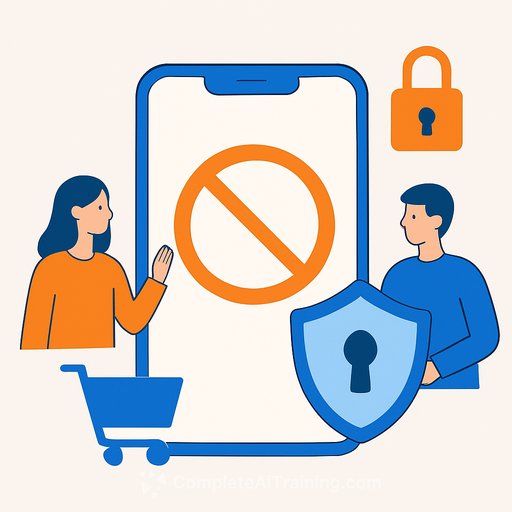
Your brand won't control where the interaction happens. You will control whether the agent reads your data correctly, stays within guardrails, and treats customers with respect. That's the job now: build the trust layer that makes agent-driven commerce safe for people and profitable for you.
The 5 risks that break trust
- Product misunderstanding. Agents guess when attributes aren't structured. They misread sizing, hallucinate features, or miss constraints.
- Overreach. Without clear limits, agents overspend, ignore budgets, or make irreversible moves without approval.
- Data sensitivity. Conversations expose intent, context, and emotion. If stored or shared opaquely, customers feel surveilled.
- Brand misrepresentation. Outdated info, invented claims, or undisclosed sponsorships hit customers before your teams can react.
- No clean recovery. When automation fails and there's no clear path to a human or fix, a single bad moment kills the relationship.
These failures create chargebacks, returns, support costs, privacy exposure, and brand damage. The real currency is trust. Earn it and agentic commerce scales. Lose it and adoption stalls.
The trust gap is measurable
In a recent consumer study, 64% said they need at least one safeguard (like a money-back guarantee) before letting an AI purchase for them. The open questions are basic: Who can charge my card? What's remembered? Who benefits-the buyer, the platform, or the advertiser?
That uncertainty is your cue. You can't control agent adoption, but you can control how your products are understood, how consent is enforced, how data is protected, and how recovery works when things break. Put systems in place now, before volume hits.
PwC's Future of Consumer Shopping Survey details this trust gap and what consumers expect.
Build the trust layer: 5 actions
1) Structure content for machines, not just humans
Agents don't "see" your brand story; they parse attributes. Shift from prose-first to attribute-first (generative engine optimization, or GEO). The goal: zero guessing. Example for a hoodie: material=fleece; temp_range=<40°F; category=loungewear; fit=relaxed; care=cold_wash; return_window=30_days.
- Define canonical attributes per category (pricing, size model, materials, constraints, use cases).
- Map customer language to attributes (e.g., "lightweight," "sustainable," "good for travel").
- Expose machine-readable data via your PIM/ecommerce platform using APIs or web markup (structured data/JSON).
- Modularize and label policies: shipping, returns, warranties, and FAQs as discrete fields.
- Continuously test agent retrieval against top intents; fix missing or ambiguous fields.
Want a deeper marketing-focused angle on GEO and agent discovery? See AI for Marketing.
2) Define clear boundaries and build in consent
Safe delegation needs three things: clear limits, traceability, and reversibility. Customers should know what the agent can do, under what conditions, and how to undo it.
- Set spending caps, budget locks, and approval thresholds (e.g., confirmation over $100).
- Show key constraints pre-checkout (budget, delivery date, return policy) and pause when outside bounds.
- Provide receipts with an audit trail: who authorized, when, and why a recommendation was chosen.
- For third-party platforms, express rules via emerging standards and push accurate product data to reduce errors. See the Agentic Commerce Protocol for how delegation and consent can work across ecosystems.
3) Protect customer data-and make that protection visible
Agentic shopping captures preferences, context, and emotion-high-value and high-risk. Practice data minimization and transient processing. Retain only what's required to complete the task.
- Give users control over memory: what's stored, for how long, and how it's used across sessions or platforms.
- Add a one-time "incognito purchase" mode where nothing persists after checkout.
- Separate sensitive conversational context from transactional data; anonymize where possible.
- Offer clear, simple consent flows with granular toggles (e.g., "remember size," "don't share across brands").
- Publish retention windows and breach response SLAs in plain language.
4) Observe how your brand shows up in agent ecosystems
If agents are the front door, you need eyes on what they say and do on your behalf. Build agentic observability: monitor prompts, responses, citations, and downstream actions that touch your brand.
- Continuously sample common shopping intents and record the agent's reasoning and sources.
- Alert on drift: outdated prices, missing disclaimers, invented features, or biased sourcing.
- Benchmark share of recommendation against competitors for priority categories and budgets.
- Red-team scenarios (low inventory, conflicting attributes, promo stacking) before peak events.
For comms and reputation teams, see AI for PR & Communications on monitoring and response.
5) Preserve relationships and plan for recovery
Automation doesn't replace accountability. Make it effortless to reach a human, get an explanation, and be made whole fast. Treat recovery as part of the product.
- Embed branded agents in third-party platforms; carry loyalty benefits and purchase history across channels.
- Auto-trigger make-good offers on failure types (late delivery, wrong size, feature mismatch).
- Provide clear escalation paths: chat to human in one step, with context handed off.
- Simulate end-to-end journeys with synthetic customers to stress-test before launch.
30-60-90 day plan
- Next 30 days: Audit top categories and SKUs for machine-readable attributes. Map customer language to attributes. Modularize policies. Prioritize 3 use cases (budgeted gift, time-boxed need, replacement buy).
- Next 60 days: Pilot consent guardrails (caps, approvals, incognito mode). Stand up observability for target platforms. Create red-team scripts. Train support on agent-specific recovery.
- Next 90 days: Expand structured data coverage. Integrate loyalty into agent flows. Formalize data retention rules. Publish a public "trust policy." Negotiate platform standards for delegation and disclosures.
Bottom line
Agent-driven shopping will scale when customers feel protected. Treat trust as strategy, not checkbox compliance. Structure your data, codify consent, secure conversation data, watch how agents represent you, and make recovery painless. Do this now, and you'll shape how customers choose in the age of AI agents.
Your membership also unlocks: