
AI news ·
Wisconsin doctors and patients increasingly use AI in healthcare
More than 80 percent of physicians nationwide use clinical AI, doubling adoption since 2023. Experts warn human oversight is critical to prevent errors and protect patient data.
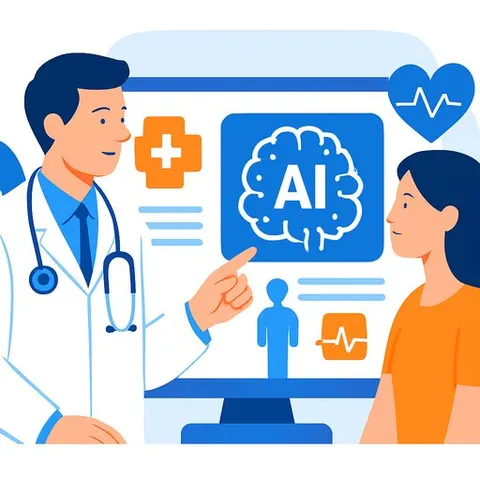
More than 80 percent of physicians nationwide now use some form of artificial intelligence in their clinical practice, according to a recent American Medical Association survey. This marks a doubling of adoption rates since 2023, signaling a structural shift in how healthcare providers manage documentation, diagnostics, and patient communication.
Ambient scribes and patient outreach
Dr. Brooke Crotty, an internal medicine physician and interim president for Inception Health at Froedtert ThedaCare in Wisconsin, said ambient scribe technology is the most common application. The AI listens in the exam room, drafts clinical notes, and summarizes the medical encounter. This allows clinicians to maintain eye contact rather than typing into a computer. "We've seen studies where we've seen more eye contact, and generally it has really helped clinicians and patients feel that it's helping them," Crotty said.
Health systems are also deploying AI agents to manage patient communication between visits. These systems can automatically reach out to schedule necessary screenings or check on a patient's recovery after a hospitalization. If the AI detects an irregular response, it routes the interaction to a human care team member for follow-up.
Hallucinations and sycophancy risks
The technology is not without flaws. Crotty identified two primary risks: hallucinations, where the system generates incorrect information, and sycophancy, where a chatbot agrees with a user's flawed premise instead of pushing back. She emphasized that these tools must operate under the guidance of a professional caregiver rather than replace clinicians. "It is just that: It's part of a broader process. It's not a standalone service," Crotty said.
Patient-driven AI use and data privacy
Patients are increasingly turning to Generative AI and LLM tools like ChatGPT for independent health information. Lu He, a healthcare informatics professor at the University of Wisconsin-Milwaukee, said individuals sometimes input their own clinical lab results into these models to seek a second opinion.
He raised concerns about accountability and data security. "What if the AI makes mistakes? Who will be responsible for those errors that may lead to severe consequences?" she said. Furthermore, patients voluntarily share sensitive health data with consumer AI platforms that lack the strict privacy protections mandated for healthcare providers.
Adoption barriers also persist across different care settings. Rural and underserved hospitals often lack the human and technological capacity required to implement AI for Healthcare safely. He added that patient digital health literacy remains a critical gap, and healthcare systems must prioritize training to help individuals use these tools safely while formal research catches up to the technology's pace.
Why this matters for healthcare professionals
Healthcare workers must proactively guide patients on the safe use of consumer AI tools, as patients will continue to seek independent diagnostics online. Clinicians should verify any AI-generated summaries or patient-reported AI outputs against official medical records. Relying on human oversight remains the only reliable safeguard against AI errors in clinical workflows.