Frontline Workers Skeptical of AI Despite Efficiency Gains, New Report Shows
Artificial intelligence is boosting productivity in shift work across hospitals, restaurants, and retail, but employees in these roles remain unconvinced-largely because employers aren't explaining how the technology affects them.
A report from Deputy analyzed data from 41 million shifts and 268 million hours worked. It found that AI reduces documentation burdens in hospitals, improves demand forecasting in restaurants, and strengthens inventory management in retail. For frontline leaders, AI cuts time spent on manual scheduling and compliance tracking.
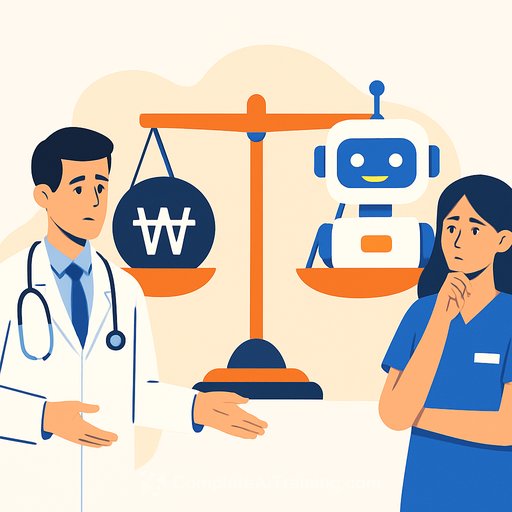
Yet the findings reveal a stark gap between adoption and communication. Nearly 75% of workers agreed that AI tools help them leave work on time more often. At the same time, 58% worry that AI will replace part or all of their job.
Around 80% of employees surveyed said their workplace lacks transparency about how AI tools are being introduced and used.
The Communication Problem
Silvija Martincevic, CEO of Deputy, said the issue isn't job elimination but operational redesign. "What we are seeing now is not replacement of frontline roles. It is the re-architecture of how those roles are supported, scheduled, coordinated, and scaled," she said.
The gap between what AI actually does and what workers understand about it will define the next phase of workforce transformation, Martincevic added. "The companies that take that seriously, and bring their workers along rather than leave them in the dark, are the ones that will actually keep their best people."
For HR leaders, the takeaway is clear: deploying AI tools without explaining them to employees creates retention risk, even when those tools make work easier. AI for Human Resources training can help HR teams develop communication strategies around AI implementation. Those responsible for workforce strategy may benefit from the AI Learning Path for CHROs, which addresses how to align AI adoption with employee retention.
Your membership also unlocks: