70% of Workers Ready for AI, but Only 39% of Leaders Believe It
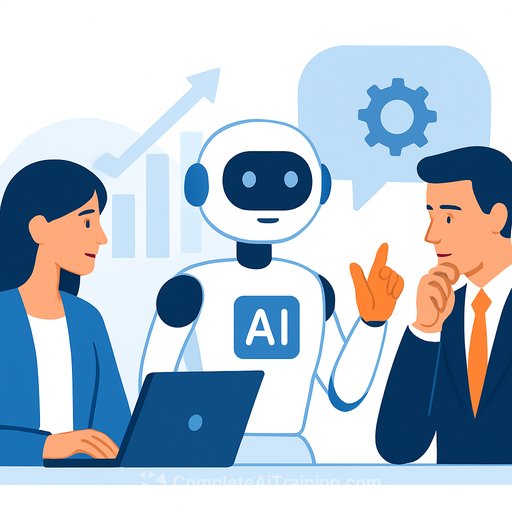
A significant gap exists between how prepared employees say they are to work with AI and how ready business leaders think they are. A global study by the Adecco Group surveyed 2,000 C-suite executives across 13 countries and found that 70% of workers report readiness to collaborate with AI agents, while just 39% of leaders believe employees would feel comfortable doing so.
The disconnect matters because companies are moving fast. Nearly half of executives expect AI agents integrated into workflows within 12 months. Yet many organisations appear to be deploying technology faster than they're building workforce trust or establishing governance structures.
Leadership Confidence Is Low
Only 22% of leaders said they are highly confident their organisations are developing the capabilities needed to keep pace with AI change. Just 31% said their leadership teams possess sufficient AI knowledge to understand the risks and opportunities.
The problem isn't access to technology anymore. It's alignment. Only 36% of executives said their talent strategy clearly shows AI will create opportunities rather than replace jobs. Only 39% directly involved employees in redesigning roles affected by AI.
Denis Machuel, Chief Executive of the Adecco Group, said: "AI may move at software speed, but organisational trust moves at human speed. Companies that ignore that gap will struggle to turn pilots into performance."
Workers Aren't the Bottleneck
The research challenges a common assumption: workers themselves are not the primary source of resistance to workplace AI. In fact, workforce readiness appears stronger than many executives believe.
This creates a paradox. While workers report higher preparedness than leaders expect, broader anxiety persists about job security. Recent research found seven in 10 workers fear AI-driven layoffs, suggesting the issue isn't capability - it's trust in how companies will use the technology.
Regional Approaches Differ
The study covered 13 countries and found different regional priorities. Leaders in the United States and Asia-Pacific reported stronger momentum on AI adoption and automation, reflecting faster investment cycles and pressure to demonstrate productivity gains.
European organisations took a more cautious approach, prioritising governance, workforce trust and long-term impact on jobs and culture. Across all regions, however, the same challenge emerged: leadership capability isn't keeping pace with AI ambition.
Future-Ready Companies Do Four Things Differently
A smaller group of organisations qualified as "future-ready" in the research. These companies were positioned significantly better to capture business value from AI.
Among future-ready organisations, 49% reported a mature approach to measuring workforce trust, compared with 18% among others. They were also far more likely to report a highly adaptable workforce: 76% versus 42%.
These companies shared common priorities:
- Transparent governance. They embedded clear structures around how AI decisions get made and communicated openly about impact on employees.
- Early employee involvement. They engaged workers earlier in redesign decisions rather than imposing systems from the top down.
- Clear communication. They explained how roles would evolve, where human judgment remained essential, and how workers could adapt.
- Leadership capability. They invested in helping executives understand AI risks and opportunities well enough to make informed strategic decisions.
What Executives Should Do Now
The report recommends six priorities for organisations accelerating AI adoption:
- Communicate a clear AI roadmap explaining how the technology supports business goals while creating employee opportunities.
- Involve employees earlier in transformation decisions rather than announcing changes after decisions are made.
- Treat AI governance and transparency as strategic priorities, not compliance exercises.
- Invest in leadership AI literacy so executives can make informed decisions about workforce transformation and ethics.
- Measure workforce trust and adaptability as business performance factors, not soft cultural issues.
- Build workforce skills before capability gaps widen, through targeted reskilling and clearer career development paths.
The Real Constraint
Companies are spending billions on AI technology. The bottleneck isn't the tools - it's the people decisions. Organisations most likely to succeed in the AI economy may not be those deploying fastest, but those building enough trust and transparency to scale technology effectively across their workforce.
That requires leadership alignment, honest communication about job impact, and systematic measurement of whether employees actually trust what's happening. It's harder than buying software, and it moves slower. But the research suggests it's what separates companies that turn AI pilots into performance from those that don't.
For more on how to approach AI transformation strategically, see AI for Executives & Strategy and AI for Human Resources.
Your membership also unlocks: