
AI news ·
Workplace experts identify five skills humans still perform better than AI
Professionals must build durable skills like empathy and ethical judgment to remain valuable as AI adoption accelerates. HR must prioritize these human traits in hiring.
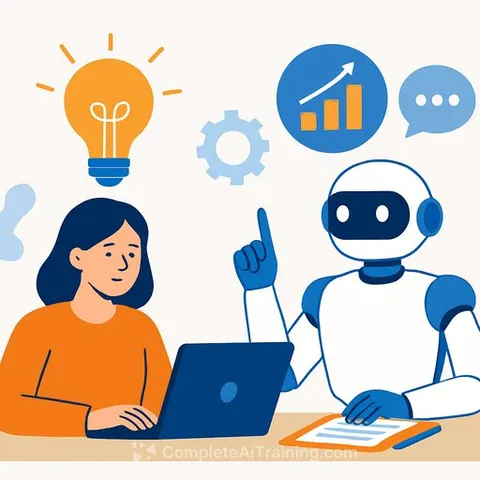
As businesses accelerate their adoption of artificial intelligence tools, workplace experts urge professionals to cultivate durable skills that machines cannot easily replicate. Cultivating these distinctly human capabilities remains the most reliable way for employees to maintain their value amid widespread technological disruption.
Durable skills in the workplace
Across industries, the traits most resistant to displacement by artificial intelligence are the ones that are distinctly human, said Maria Flynn, president and CEO of Jobs for the Future. She points to relationship building, conflict resolution, the ability to guide people and ethical judgment as primary examples. Even in technical roles like IT support, organizations increasingly seek candidates who communicate well and take leadership initiative.
Flynn noted that these capabilities hold their value across economic shifts and labor market disruptions. For HR professionals evaluating these traits, understanding AI for Human Resources provides context on how automation shifts hiring priorities toward these enduring human qualities.
The limits of artificial intelligence
Artificial intelligence struggles to interpret body language or read between the lines, making human empathy a critical asset. Marco Iansiti, a professor at Harvard Business School, highlighted this during a recent hospital stay. "There was a human connection there that I found very valuable," Iansiti said. "Would I have let a robot do the same thing? No."
While AI can handle mundane paperwork, it cannot replicate the trust built through years of face-to-face client interaction. Machines also lack the nuanced tone required to manage workplace conflicts or ease ruffled feathers among team members.
AI models also generate inaccuracies and are prone to flattering users, requiring strict human oversight. Amalia Kaufman, an instructor at the University of California, Irvine Division of Continuing Education, emphasized the need for subject matter expertise. "You have to have the cognition and the critical thinking and the subject matter expertise to make sense of it, and to know when it's wrong," Kaufman said. "You have to check your facts."
The human edge in ambiguity
Humans make judgment calls based on a constellation of lived experiences, whereas artificial intelligence struggles in gray areas. Heather Stefanski, chief learning and development officer at McKinsey, warned against over-reliance on automated problem-solving. "If we're all just using the AI answer to problem-solve, how are you really going to be distinctive?" Stefanski said.
The ability to see all angles of an issue and add unique context remains a form of intelligence that people possess to a greater extent than current models. Furthermore, while developers can build guardrails into AI systems, machines lack emotional reactions and cannot possess a true conscience for complex ethical decisions.
Why this matters for Human Resources
HR leaders must recalibrate their hiring and development strategies to prioritize these durable capabilities over easily automated technical tasks. By explicitly naming and evaluating skills like ethical judgment and conflict resolution in job descriptions, HR departments can build workforces that genuinely complement new technologies. Professionals looking to align their teams with these shifts can explore an AI Learning Path for HR Managers to balance automation with essential human leadership skills.