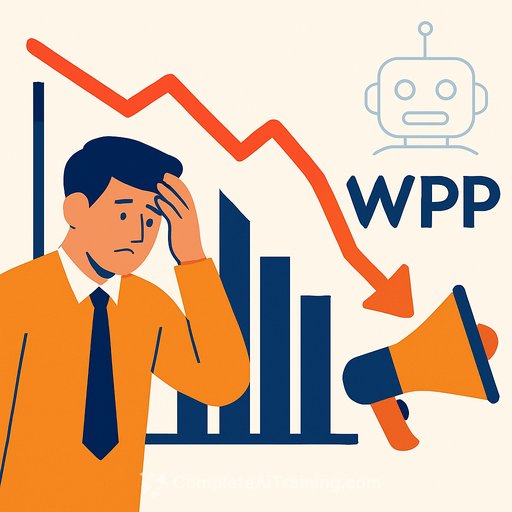
WPP Shares Drop Sharply Amid Ad Industry Uncertainty
Shares of WPP, the London-based advertising giant, fell 18% on Wednesday, hitting $29.34—its lowest level since early 2020. This steep decline followed disappointing quarterly earnings and a surprise cut to profit forecasts. WPP attributed the setback to a mix of client losses and economic concerns.
The advertising sector is currently facing major disruption from AI technologies, which can handle tasks like media planning, buying, and creative execution at a fraction of traditional costs. This shift is unsettling many established agencies.
Trading volume for WPP soared to nearly eight times its average, reflecting heightened investor anxiety. The decline coincided with a tough day on the London Stock Exchange, where shares touched a 16-year low. In the U.S., other major agencies Omnicom and Interpublic also lost about 3% each. Last December, Omnicom announced plans to acquire Interpublic, aiming to create the world’s largest agency and leaving Publicis and WPP as the remaining major players.
Client Departures and Leadership Changes
Recent weeks have been challenging for WPP beyond stock performance. Paramount ended its two-decade relationship with WPP Media, a key subsidiary, pulling its movie studio campaigns and other projects. Coca-Cola shifted its North American media buying to Publicis, which also took Mars away from WPP.
CEO Mark Read, who plans to step down before year-end, told analysts the profit downgrade reflects both client losses and ongoing economic uncertainty. He acknowledged that while WPP Media’s new strategy is progressing, it has yet to improve business results.
Industry-Wide Headwinds and AI Impact
Snap Inc. CEO Evan Spiegel commented on the situation during a CNBC interview, noting the challenging business environment for advertising. Snap’s own ad revenue has been hit by “macro headwinds,” including tariff uncertainties, causing its shares to drop 46% over the past year.
Meanwhile, digital ad platforms like Meta and YouTube have managed to maintain steady growth, showing some resilience in the sector.
The coming weeks will be critical as more media and tech companies release quarterly earnings, providing clearer insights into the health of the advertising industry amid ongoing economic and technological shifts.
- Key factors affecting WPP: client defections, economic jitters, AI-driven disruption
- Sector trends: consolidation moves, shifts in media buying, uneven growth across digital platforms
- Leadership: CEO Mark Read to step down, new strategies in progress but results pending
For professionals interested in how AI is transforming marketing and advertising, exploring relevant AI courses can provide valuable skills to adapt to these changes. Check out comprehensive offerings at Complete AI Training.
Your membership also unlocks: