
AI news ·
Writer Saikat Majumdar argues human creativity remains essential in the age of AI in new book
AI won't replace human creativity, but it will force artists to rethink what makes their work distinctly human. The technology handles technical craft well; personal consciousness is harder to replicate.
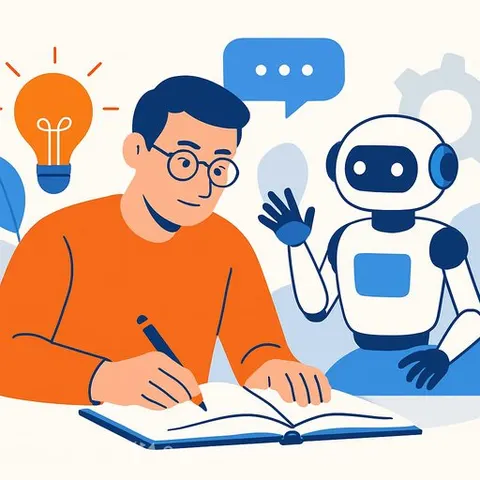
AI Won't Replace Human Creativity, But It Will Reshape How Artists Work
A writer and university professor argues that artificial intelligence will not make human creativity obsolete, but will force a fundamental rethinking of what makes art distinctly human.
The argument hinges on a distinction between two dimensions of artistic work. One dimension operates like science: technical skills, patterns, and rules that can be organized into systems and taught through training. The other is wilder and more idiosyncratic-the personal element that remains unpredictable even to the artist creating it.
AI has already mastered the first dimension. It can learn and replicate the technical foundations of any art form, from filmmaking to music composition. But the second dimension-the subjective consciousness that produces something unique and unrepeatable-remains fundamentally different.
"Art celebrates the particular and the unique," the argument goes. A story set in a specific place on a specific afternoon captures one person's experience, one mood, one moment that happens only once. That particularity is what distinguishes art from mere technical execution.
The Consciousness Question
AI has demonstrated remarkable ability to simulate human feeling and consciousness without actually possessing either. This raises an unsettled question: if AI can perfectly simulate a personal consciousness, does the distinction matter?
The concern isn't new. In 1995, AI researcher Douglas Hofstadter worried that artificial intelligence would demonstrate that humanity's most cherished qualities-the music of Bach, the complexity of human emotion-were simple to mechanize. "If such minds of infinite subtlety and complexity and emotional depth could be trivialised by a small chip, it would destroy my sense of what humanity is about," he said.
Recent developments suggest this has partially come to pass. Yet history offers a counterpoint. Photography threatened to make painting obsolete in the 19th century. Instead, it narrowed realist painting's reach and opened space for impressionism and post-impressionism. The printing press didn't kill storytelling-it created the novel and made private reading widespread.
AI Is Different
AI differs from those earlier technologies in scope and capability. It's a general-purpose technology like the steam engine or electricity, but with the added dimension of autonomous learning and evolution. Its impact will be wider and more far-reaching.
That doesn't mean human creators will become irrelevant. But the roles available to artists will reconfigure in unexpected ways. Writers, filmmakers, musicians, and painters will need to understand which aspects of their work machines now handle better-and which remain distinctly human.
For writers specifically, this means understanding where AI for Writers tools can assist with pattern-based work-structure, pacing, technical execution-while protecting the space where personal consciousness matters most. Understanding how generative AI and LLM systems work can clarify which parts of the creative process are at risk and which remain irreducibly human.
The real question isn't whether humans will matter. It's how human work will change, and whether education and employment systems can adapt quickly enough to help people navigate that shift.