
AI news ·
Writers resort to time-stamps and daily drafts to prove their work is human as AI accusations spread
Writers now keep timestamped drafts and photograph themselves working to prove their writing is human. No legal or technical standard exists to verify authorship, leaving reputations vulnerable to suspicion alone.
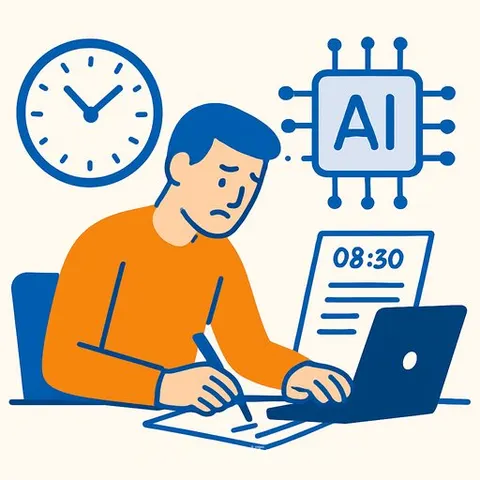
Writers Face New Burden: Proving Their Work Is Human
A regional winner of the Commonwealth Prize faced accusations of using AI to generate a short story. The allegation sparked the familiar debate: ban AI entirely, allow it with safeguards, or accept it as inevitable. What followed was social media castigation, calls for boycotts, and aggressive trolling.
No legal process exists to prove or disprove whether work is machine-generated. No technical standard determines if text came from a human or an algorithm. This gap creates space for reputation damage based on suspicion alone.
The Real Problem Gets Obscured
Boycotting authors accused of using AI addresses a symptom, not the cause. The underlying issue is that AI systems train on published authors' work without consent or compensation. Those authors are already in court over copyright infringement. Focusing anger on individual writers masks the structural unfairness.
Literary journal editors and prize judges now face pressure to differentiate human from machine creativity. These gatekeepers-already underpaid and overworked-carry a burden they didn't create. The result could shrink an already fragile publishing ecosystem.
Writers Already Work in Precarious Conditions
Most authors cannot live off writing alone. Their labor has long generated capital for publishers and platforms while they worked in exploitative conditions. A select few-J.K. Rowling, Stephen King-reach financial security. The rest write for recognition and reputation.
If AI can produce what writers produce, the exclusivity dissolves. Writers lose standing in what theorists call the "reputation economy"-the belief that their work reflects unique talent. What remains is what researchers recognize as "hope labour": work done under poor conditions in exchange for a potential future that becomes less certain.
A New Form of Precarity Emerges
Writers now describe protective measures to establish authenticity. Some keep time-stamped drafts. Others photograph themselves at work. Many send daily drafts to friends as evidence. Some use software that records writing history.
None of these methods actually prevent false accusations or prove originality. They're mechanisms to feel in control when control is slipping away. They represent what the author calls "moral precarity"-the obligation to constantly prove you're generating your own work to maintain your reputation and hope.
This moral precarity compounds existing precarity. Writers face unstable income, limited opportunities, and now must shoulder additional labor-producing evidence of their humanity-just to protect their standing.
What AI Itself Reveals
When asked if it feels responsible for affecting authors and human creativity, ChatGPT responded: "I feel an inability to feel shame right now."
The statement cuts to something essential. AI systems operate without accountability or conscience. Writing that contains shame-moral weight, ethical consideration, human vulnerability-becomes distinctively recognizable as human work.
The irony is sharp: in trying to prove they're human, writers must perform humanity in ways algorithms cannot. But the performance itself becomes exhausting labor, layered on top of already difficult work.
For creatives navigating this shift, understanding how AI affects writing and your role in it matters. The technology isn't disappearing. What changes is how you document, protect, and think about your work.