
AI news ·
Writing nonprofit tests AI tool that asks questions instead of writing for students
Write the World's AI writing tool Clara refuses to write for students - it asks questions instead. The Cambridge nonprofit built it to preserve authentic teen writing across its 125-country platform.
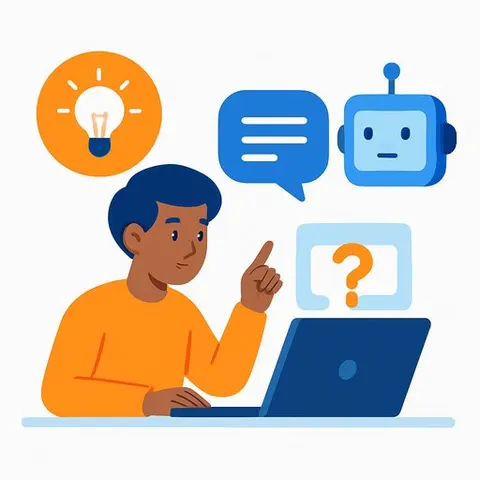
A Writing Tool That Won't Write for You
Write the World, a Cambridge nonprofit that reaches teenagers across 125 countries, has built an AI tool that refuses to do students' work. Instead, Clara asks questions.
The tool, launched last July, prompts students to explain their ideas, consider their audiences, and think through structure, evidence, tone and word choice. When asked to write the next sentence of a draft, Clara declines-then asks the writer to identify the main argument and find a specific example to support it.
Why the nonprofit built Clara
David Weinstein, founder and CEO of Write the World, said the organization began developing Clara two years ago after noticing AI-generated writing appearing on its platform. The nonprofit's core mission centers on authentic writing, which prompted serious consideration about how to respond.
Write the World first surveyed students about their AI use-whether they relied on it for brainstorming, grammar checks, or other purposes. The organization then partnered with Benjamin Klieger, a student at Stanford Online High School who was developing an AI companion using Socratic-style questions to guide teenage writers.
Brittany Collins, Write the World's director of education, initially skeptical about AI, became convinced by Clara's ability to push students toward reflection. "It's not generating text," Collins said. "I think that's the biggest differentiator that we see."
How students use it
Sofia Gontcharenko, 17, a student at Newtonbrook Secondary School in Toronto, found Clara most useful during brainstorming. "It introduces itself as a helper, as opposed to a writer," she said. "It helps you think in a different way."
Ipsi Karnam, 17, at Fuquay-Varina High School in North Carolina, said Clara helped her develop nonfiction and essay writing by suggesting structure and where to "start here" or "add a hook." But with poetry and creative writing, too much feedback created problems.
"It had sort of a Ship of Theseus effect with my poetry," Karnam said, referring to the philosophical paradox. "I wouldn't even recognize the piece as my own voice."
Staying in bounds
Karnam's concern points to a challenge Write the World is still navigating: how to make Clara useful without letting it push into the writer's voice. Collins said the organization is working to improve accessibility, including adding voice-based conversations and more skills-based instruction for classrooms.
Clara is not meant to replace teachers. Collins described it as "the side-by-side tutor that's available 24-7 in the way that a teacher cannot be."
Write the World has developed a classroom version, with a Google Docs pilot running at Bryant University this spring involving 200 first-year students. Teachers can see broad categories of student questions while individual responses remain private. Plans call for expanding to as many as 2,000 students next fall.
"Teachers know far more about their students and their curriculum than Clara or any AI ever could," Collins said. "They'll be in a position to give feedback that's more targeted and potentially impactful."
For Karnam, Clara's value depends on maintaining clear boundaries. It can help young writers ask better questions about their work, but it cannot replace the judgment, emotion and intent behind the writing itself. "Writing is an art, and AI cannot produce human art, because art is emotion," she said.
For writers interested in how AI can support rather than replace their craft, see resources on AI for Writers and AI for Education.