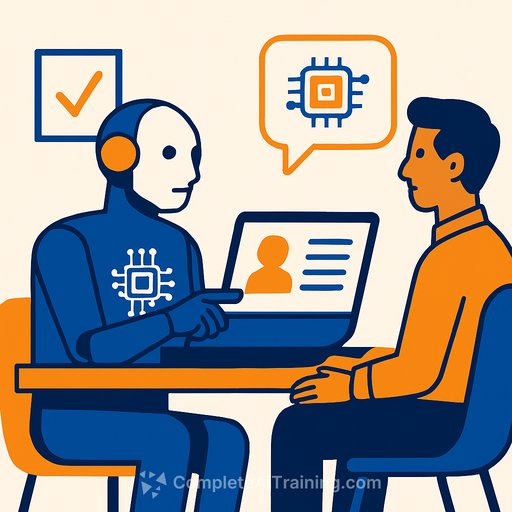
Welcome to Your Job Interview. Your Interviewer Is A.I.
You might have heard that artificial intelligence is coming for your job. But before that happens, it’s already replacing your job interviewer.
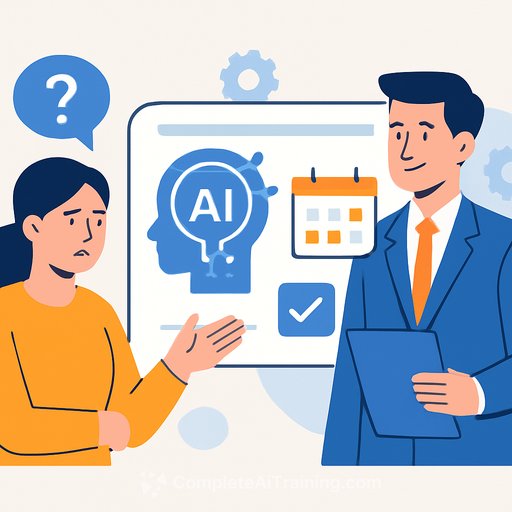
Recently, Jennifer Dunn, a 54-year-old marketing professional from San Antonio, was scheduled for a vice president of marketing interview through a recruiting firm. Instead of a human recruiter, she received a text message from Alex, a virtual artificial intelligence recruiter, to set up the interview. When the time came, Alex was on the phone, ready to ask questions.
“Are you a human?” Jennifer asked. “No, I’m not a human,” Alex replied. “But I’m here to make the interview process smoother.”
For 20 minutes, Jennifer answered Alex’s questions about her skills and experience. However, Alex couldn’t answer many of her questions about the job itself. The friendly tone didn’t make up for the lack of genuine interaction, and Jennifer ended the call before completing the interview.
What This Means for Hiring
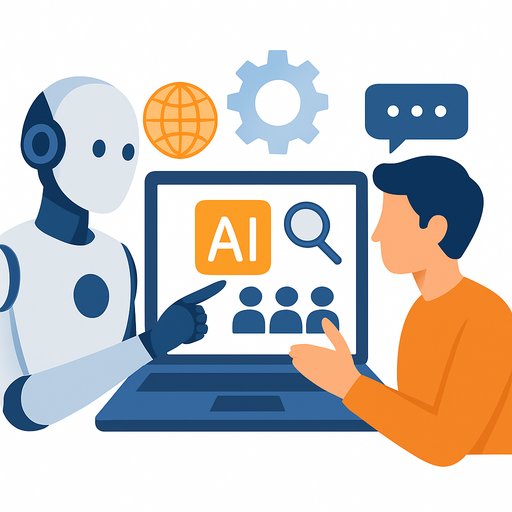
Job seekers across the country are increasingly encountering AI-powered interviewers — faceless voices or avatars that ask questions and respond in real time. These are examples of “agentic A.I.,” systems designed to act autonomously during conversations, building on candidates’ responses without human involvement.
For human resources professionals, this shift brings both opportunities and challenges:
- Efficiency: AI interviewers can handle initial screening at scale, freeing up time for HR teams to focus on deeper candidate evaluation.
- Consistency: Every candidate gets asked the same questions in the same way, which can reduce bias in early interviews.
- Candidate Experience: AI can feel impersonal. As Jennifer’s experience shows, candidates may find AI interviews hollow or frustrating if the system can’t answer their questions or provide meaningful interaction.
Best Practices for HR Teams Using AI Interviewers
- Set Clear Expectations: Inform candidates upfront that they will be speaking with an AI and explain what to expect during the interview.
- Combine AI with Human Follow-Up: Use AI for initial screening but ensure a human interviewer follows up to address candidate questions and provide a personal touch.
- Test and Train Your AI: Continuously improve the AI’s ability to respond to candidate questions about the role and company culture.
- Monitor Candidate Feedback: Gather feedback to identify pain points and improve the AI interview experience.
As AI interviewers become more common, HR professionals should stay informed and adapt their hiring processes accordingly. For those looking to understand AI’s role in recruitment and other business functions, Complete AI Training offers courses that cover practical AI applications in the workplace.
Your membership also unlocks: