YouTube Expands AI Detection Tool to Politicians and Journalists
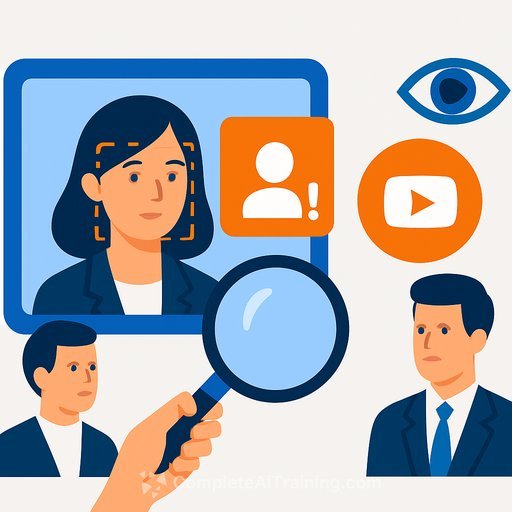
YouTube will let politicians and journalists use its likeness detection tool, the company announced Wednesday. The feature flags AI-generated content that impersonates a person's face or voice and allows them to request removal if it violates YouTube policy.
The expansion targets a pilot group of lawmakers and reporters. Users must submit a video selfie and government identification to enroll.
YouTube rolled out the likeness detection tool in 2024 for creators in its Partner Program. The company said it always planned to expand beyond creators.
"We've always known that there was a need for this tech to go beyond just creators," said Amjad Hanif, vice president of Creator Products, in a press briefing. "We're excited to announce that we're going to expand this pilot to journalists and government officials."
How the Tool Works
The detection system identifies AI-generated video content that uses someone's likeness without permission. When a match is found, the person can request removal.
YouTube will not automatically delete flagged content. "While this tool provides a powerful way to manage unauthorized AI-impersonation, detection does not guarantee removal," the company said in a blog post.
The company will preserve content that qualifies as parody, satire, or public interest commentary. "YouTube has a long history of protecting free expression and content in the public interest-including preserving content like parody and satire, even when used to critique world leaders or influential figures," YouTube said.
Why Politicians and Journalists Need This
AI-generated impersonations pose particular risks for public figures. Bad actors can create fake videos of politicians or journalists to spread misinformation or damage reputations.
Leslie Miller, YouTube's vice president of Government Affairs and Public Policy, said the company recognizes these threats. "We know that the risks of AI impersonation are particularly high for those in the civic space."
YouTube declined to name the politicians and journalists in the pilot program. The company said it's starting with a limited group to understand how these users will employ the tool.
For journalists and public figures managing their online presence, understanding these detection capabilities is increasingly necessary as AI video generation becomes more accessible.
Your membership also unlocks: